
Most people in business are reacting to events. The elite are reacting to patterns.
And the people who build generational wealth? They recognize patterns before the crowd even notices them. That is the real game.
Macro pattern recognition is one of the most powerful skills in entrepreneurship, investing, technology, economics, media, and wealth creation. It is the ability to step back from noise, identify large-scale shifts happening across society, technology, finance, culture, and human behavior, and position yourself before the world catches up.
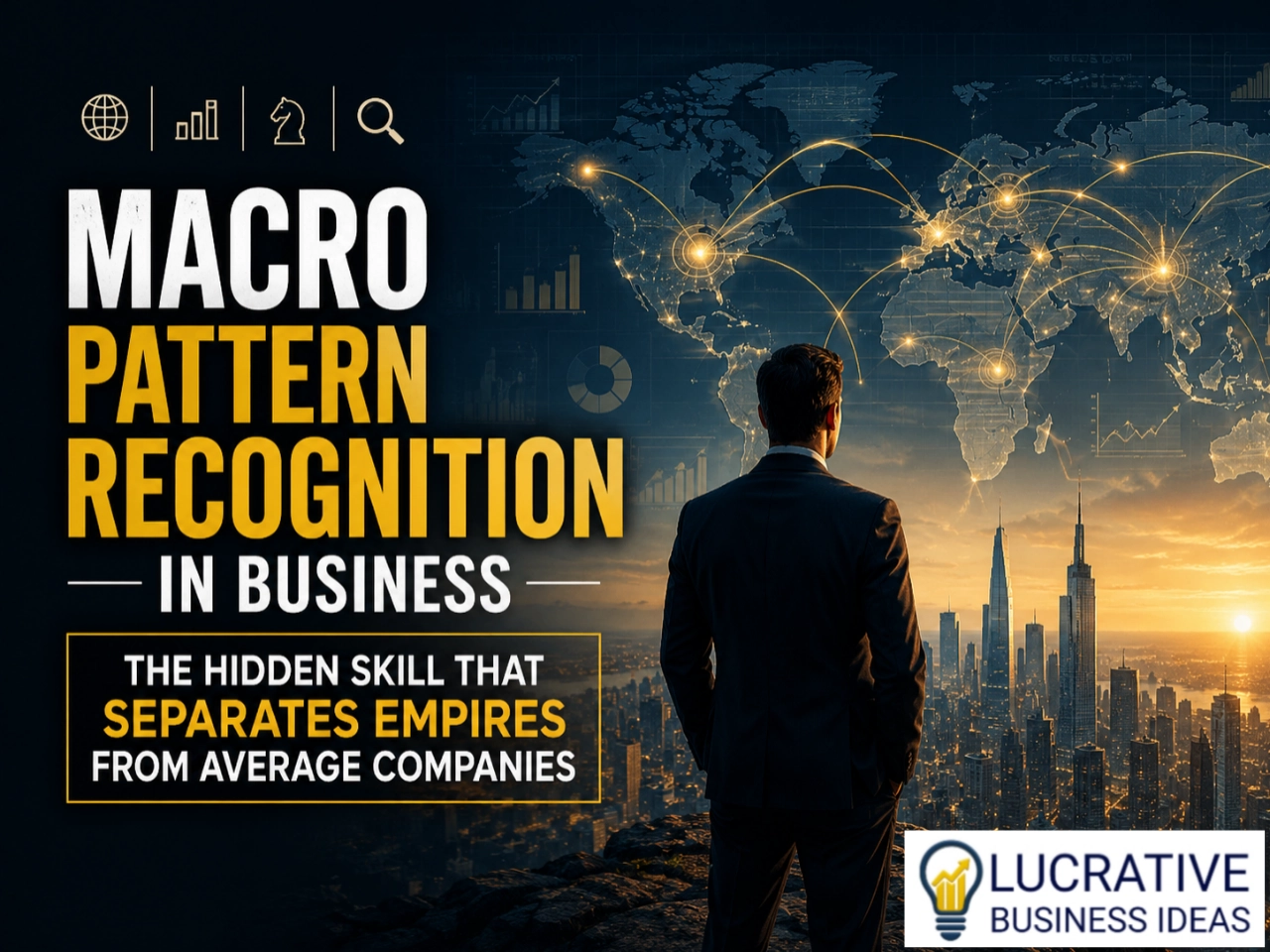
This is how unknown startups become billion-dollar companies. This is how investors enter markets early. This is how industries are disrupted.
Most businesses fail because they are solving yesterday’s problems. Macro pattern recognition helps you see tomorrow.
What Is Macro Pattern Recognition?
Macro pattern recognition is the ability to identify large, repeating, long-term trends that shape markets, industries, human behavior, and economic systems.
It is about seeing the invisible currents beneath everyday events.
The average person sees isolated news stories.
A macro thinker sees connected systems.
For example:
Most people saw smartphones as better phones.
Macro thinkers saw a future where phones would become:
- banks
- cameras
- televisions
- offices
- marketplaces
- entertainment hubs
- advertising platforms
- identity systems
That single macro pattern created trillions of dollars.
Another example:
Most people saw artificial intelligence as a tech trend.
Macro thinkers saw:
- labor disruption
- productivity explosions
- software automation
- content decentralization
- new education systems
- new economic models
- massive shifts in power structures
One mindset reacts. The other positions early. That is the difference.
Why Macro Pattern Recognition Matters More Than Ever
We are living in the fastest period of change in human history – Technology compounds, Information spreads instantly, Industries collapse faster, New markets emerge overnight.
The old business model was:
- Learn one skill
- Build one career
- Stay in one industry
- Grow slowly
That world is gone.
Today:
- AI changes industries in months
- Consumer behavior shifts rapidly
- Platforms rise and die quickly
- Economic cycles move faster
- Attention is the new currency
If you cannot recognize macro patterns, you become trapped inside outdated systems.
- You become the taxi company ignoring ride-sharing.
- The retail giant ignoring e-commerce.
- The media company ignoring creators.
- The bank ignoring fintech.
- The school ignoring AI education.
History repeatedly destroys people who mistake temporary comfort for permanent stability.
The Difference Between Trends and Macro Patterns
This is where many people get confused. Not every trend is a macro pattern. A trend may last months. A macro pattern can shape decades.
A Trend
- Viral dance challenges
- Temporary social media apps
- Short-term fashion crazes
- Meme coins with no real utility
A Macro Pattern
- Digital payments
- Artificial intelligence
- Remote work
- Creator economy
- Aging populations
- Climate adaptation
- Automation
- Decentralized finance
- Personal branding
- Data monetization
Macro patterns reshape infrastructure, culture, and economic behavior.
They create entire ecosystems.
The 7 Core Sources of Macro Patterns
1. Technological Shifts
Technology is the biggest pattern creator in modern history.
Every major technological leap creates:
- winners
- losers
- new behaviors
- new industries
- new wealth opportunities
Examples:
- Internet
- Smartphones
- Cloud computing
- Blockchain
- AI
- Robotics
- Biotechnology
The smartest entrepreneurs ask: “What does this technology make possible that was previously impossible?”
That question alone can change your life.
2. Human Behavior Changes
Human behavior evolves slower than technology, but when it shifts, industries explode.
Examples:
- People wanting convenience created delivery apps
- Short attention spans created TikTok-style media
- Distrust in institutions increased independent creators
- Loneliness created online communities
- Remote work changed real estate demand
Human emotions create markets.
- Fear.
- Vanity.
- Status.
- Convenience.
- Belonging.
- Security.
If you understand human psychology, you can predict business movements more accurately.
3. Economic Cycles
Every economy moves in cycles:
- expansion
- contraction
- panic
- recovery
- speculation
- stabilization
Most people think current conditions will last forever. They never do.
Great entrepreneurs understand:
- inflation cycles
- interest rates
- liquidity flows
- debt cycles
- consumer spending shifts
Economic awareness helps you know:
- when to scale aggressively
- when to conserve cash
- when to acquire assets cheaply
- when markets are irrational
4. Demographic Shifts
Population changes create enormous business opportunities.
Examples:
- Aging populations increase healthcare demand
- Younger populations fuel creator economies
- Urbanization changes housing markets
- Migration reshapes labor markets
Demographics quietly shape trillion-dollar industries.
Smart investors watch people movement more than headlines.
5. Regulatory and Political Changes
Laws create opportunity.
Entire industries rise because governments:
- legalize something
- subsidize something
- ban something
- regulate something
Examples:
- Renewable energy incentives
- Crypto regulations
- Data privacy laws
- Electric vehicle policies
- AI governance
Policy shifts create winners before the public notices.
6. Infrastructure Evolution
Infrastructure changes society.
Examples:
- Faster internet enabled streaming
- Mobile banking enabled fintech in Africa
- Logistics systems enabled e-commerce
- AI chips enabled generative AI
Infrastructure often matters more than flashy products.
People who understand infrastructure see the future earlier.
7. Cultural Momentum
Culture creates economic gravity.
Watch:
- language shifts
- memes
- creator influence
- youth behavior
- digital communities
- identity movements
Culture determines where attention flows.
And attention eventually becomes money.
How Billionaires Use Macro Pattern Recognition
Most billionaires are not merely hard workers. They are pattern observers.
1. Jeff Bezos
He recognized:
- internet growth
- logistics scalability
- consumer convenience
- digital commerce
While others saw bookstores, he saw infrastructure.
2. Elon Musk
He identified multiple macro patterns:
- sustainable energy
- space commercialization
- AI
- automation
- electric transportation
He consistently positions himself where the future is moving.
3. Mark Zuckerberg
He saw:
- digital identity
- social connectivity
- mobile communication
- creator ecosystems
- virtual interaction
Social media was not the end goal. Human digital behavior was.
4. Reed Hastings
He recognized:
- broadband expansion
- changing entertainment behavior
- convenience culture
- decline of physical media
Most companies react after disruption starts. Pattern recognizers move before the explosion.
How to Develop Macro Pattern Recognition
This skill is trainable. Most people simply never practice it intentionally.
1. Stop Consuming Only Local Information
If all your information comes from:
- gossip
- celebrity news
- local drama
- random entertainment
You will never see macro patterns.
Study:
- technology
- economics
- demographics
- venture capital
- geopolitics
- startup ecosystems
- AI research
- behavioral psychology
Your information diet determines your financial future.
2. Study History Aggressively
Patterns repeat because human nature repeats.
History teaches:
- bubbles
- crashes
- innovation cycles
- empire shifts
- technological adoption curves
People who understand history recognize future similarities faster. The future is usually history wearing modern clothes.
3. Learn First-Principles Thinking
Do not blindly copy trends. Break systems into fundamentals.
Ask:
- Why does this exist?
- What human need does it solve?
- What happens if technology improves?
- What becomes cheaper?
- What becomes faster?
- What becomes decentralized?
First-principles thinking helps you see opportunities others miss.
4. Follow Contradictions
Massive opportunities often hide inside contradictions.
For example:
- People want privacy but share everything online
- People want convenience but fear AI
- People distrust media but consume more content than ever
- People want freedom but depend heavily on platforms
Contradictions create openings.
5. Watch Young People
Youth behavior predicts future markets.
Today’s “weird habits” become tomorrow’s billion-dollar industries.
Young people often adopt:
- new media
- new payments
- new communication systems
- new entertainment
- new identity models
The future usually appears ridiculous before it becomes normal.
6. Track Capital Flows
Money leaves clues.
Watch where:
- venture capital flows
- governments invest
- hedge funds rotate
- infrastructure spending increases
- acquisitions happen
Capital often predicts the next wave before the public understands it.
7. Learn to Zoom Out
Most people are trapped in daily noise.
Macro thinkers zoom out:
- 5 years
- 10 years
- 20 years
Ask: “Where is the world heading, regardless of current headlines?”
That question changes your perspective entirely.
The Framework for Identifying Winning Macro Opportunities
Here is a practical framework.
Step 1: Identify a Major Shift
Example:
- AI automation
- remote work
- digital finance
- creator economy
Step 2: Ask What This Changes
Every major shift destroys old systems.
AI changes:
- education
- customer service
- software
- hiring
- content creation
- consulting
Step 3: Identify Friction
Where there is confusion, inefficiency, or pain, there is opportunity.
Examples:
- businesses confused about AI integration
- creators needing monetization
- companies needing cybersecurity
- people overwhelmed by information
Pain creates markets.
Step 4: Position Early
The biggest rewards go to early movers.
Not because they are lucky.
Because they acted before consensus formed.
Step 5: Compound Relentlessly
Once the macro wave begins:
- build aggressively
- improve systems
- scale distribution
- deepen expertise
Timing matters. But execution matters more.
The Biggest Macro Patterns Happening Right Now
1. Artificial Intelligence
AI is restructuring:
- labor
- software
- education
- search
- media
- marketing
- consulting
- coding
This is not a temporary trend. It is infrastructure-level transformation.
2. The Creator Economy
Individuals now compete directly with corporations.
Personal brands are becoming businesses.
Creators now own:
- audiences
- products
- communities
- education systems
- media channels
The future favors individuals with leverage.
3. Decentralized Finance and Digital Assets
Finance is slowly becoming programmable.
This changes:
- banking
- ownership
- payments
- investing
- contracts
The infrastructure is still immature, but the macro direction is significant.
4. Automation and Robotics
Businesses increasingly prefer:
- scalable systems
- automation
- reduced labor dependency
This affects:
- logistics
- manufacturing
- customer support
- agriculture
- transportation
5. Longevity and Health Optimization
People are becoming obsessed with:
- lifespan
- biohacking
- supplements
- preventive healthcare
- mental performance
Health is becoming a massive economic sector.
6. Africa’s Digital Expansion
Africa represents one of the largest long-term macro opportunities globally.
Key drivers:
- mobile adoption
- fintech growth
- youthful population
- digital entrepreneurship
- creator economy expansion
Many global investors are paying attention quietly while mainstream narratives remain outdated.
Common Mistakes People Make
1. Chasing Hype Instead of Structure
Hype is emotional. Macro patterns are structural. Learn the difference.
2. Entering Too Late
Most people wait for proof. By then, the biggest gains are often gone.
3. Ignoring Timing
Being early matters. But being too early can destroy you financially. Timing is strategic positioning.
4. Overestimating Short-Term Change
People exaggerate what happens in 1 year. They underestimate what happens in 10 years.
5. Consuming Noise Instead of Knowledge
Most information online is distraction disguised as relevance. Guard your attention carefully.
How to Build a Personal Macro Intelligence System
Create your own system.
Daily
- Read technology news
- Track AI developments
- Study markets
- Observe consumer behavior
Weekly
- Analyze industries
- Study startup funding
- Watch emerging apps and platforms
Monthly
- Review macroeconomic shifts
- Study demographic changes
- Evaluate long-term opportunities
Yearly
- Reposition your skills
- Reposition your investments
- Reposition your business model
- Adaptation is survival.
The Real Secret Behind Macro Pattern Recognition
The deepest truth is this: Macro pattern recognition is not about predicting the future perfectly. Nobody can do that consistently.
It is about increasing your probability of being positioned correctly when the future arrives.
That is the game. You do not need certainty. You need asymmetrical positioning.
A small correct position in a massive macro wave can change your entire life.
See Also:
- 50 Jobs AI May Replace & 50 Jobs That Are Safest from Artificial Intelligence
- All About First Principle Thinking & Other Powerful Problem-Solving Frameworks Used By Entrepreneurs & Other Successful People
Final Thoughts
Most people spend their lives reacting to reality.
The most successful entrepreneurs, investors, and innovators learn to anticipate reality.
Macro pattern recognition is one of the highest-income skills of the modern era because it allows you to:
- see opportunities early
- avoid dying industries
- build future-proof businesses
- invest intelligently
- adapt faster than competitors
- understand where attention, money, and technology are moving
The future rarely arrives suddenly. It leaves signals everywhere. The question is whether you are trained enough to notice them.
Because once you learn how to recognize macro patterns, you stop merely participating in the economy. You begin positioning yourself ahead of it.
Frequently Asked Questions (FAQs) About Macro Pattern Recognition in Business
1. What is macro pattern recognition in business?
Macro pattern recognition is the ability to identify large-scale shifts happening across industries, technology, economics, culture, demographics, and human behavior before they become obvious to the masses.
It is the skill of connecting small signals into a bigger picture.
For example, a regular person might see:
- more people using AI tools
- more companies automating tasks
- more layoffs in repetitive jobs
But a macro pattern thinker sees a deeper transformation:
- the restructuring of labor markets
- the rise of AI-native businesses
- the decline of traditional knowledge work
- the creation of new digital economies
Macro pattern recognition helps entrepreneurs and investors position themselves early instead of reacting late.
2. Why is macro pattern recognition important for entrepreneurs?
Because business rewards timing almost as much as execution.
A great business idea launched at the wrong time can fail badly.
An average business launched at the perfect macro moment can explode.
Macro pattern recognition helps entrepreneurs:
- identify future demand
- avoid declining industries
- enter emerging markets early
- create products people will need tomorrow
- adapt faster than competitors
It also helps business owners avoid becoming obsolete.
Many companies collapse not because they were bad businesses, but because they ignored major shifts happening around them.
3. Can macro pattern recognition be learned, or is it a natural talent?
It can absolutely be learned.
Some people naturally notice patterns faster, but macro thinking is mostly developed through:
- observation
- curiosity
- reading widely
- studying history
- understanding systems
- analyzing human behavior
- connecting unrelated information
The more industries, technologies, economic systems, and cultural movements you study, the stronger your pattern recognition becomes.
Like any high-value skill, it improves with deliberate practice.
4. What is the difference between a trend and a macro pattern?
A trend is usually temporary or narrow. A macro pattern is broad, structural, and long-lasting.
For example:
Trend:
- A viral social media challenge
- Temporary fashion styles
- Short-lived crypto hype
Macro Pattern:
- Artificial intelligence
- Remote work
- Digital payments
- Automation
- Creator economy
- Mobile-first commerce
Macro patterns reshape how societies operate.
Trends usually ride on top of macro patterns.
The smartest entrepreneurs focus more on structural change than temporary hype.
5. How do investors use macro pattern recognition to make money?
Smart investors look for industries that are likely to grow massively over the next 5–20 years.
Instead of only focusing on current profits, they study:
- where technology is heading
- where consumer behavior is shifting
- where governments are investing
- where capital is flowing
- where infrastructure is evolving
For example:
- Investors who recognized the smartphone revolution early made fortunes.
- Investors who saw cloud computing early benefited massively.
- Investors now watching AI, robotics, biotech, and digital infrastructure are attempting to position themselves ahead of future waves.
Macro investing is about identifying massive shifts before the crowd fully understands them.
6. What are the biggest macro patterns shaping the future right now?
Several major macro patterns are already reshaping the global economy:
a. Artificial Intelligence
AI is transforming:
- software
- education
- healthcare
- marketing
- finance
- customer service
- productivity
b. Automation and Robotics
Businesses are increasingly replacing repetitive labor with scalable systems.
c. Creator Economy
Individuals are building global brands and businesses directly online.
d. Digital Finance
Fintech, blockchain, digital banking, and tokenized assets are changing financial systems.
e. Health and Longevity
People are spending more money on preventive healthcare, wellness, mental performance, and lifespan optimization.
f. Africa’s Digital Growth
Africa’s mobile-first economy, fintech adoption, youthful population, and entrepreneurial energy create major long-term opportunities.
These patterns are likely to influence global wealth creation for decades.
7. How can I improve my macro pattern recognition skills?
Start by improving the quality of information you consume.
Study:
- technology
- economics
- psychology
- demographics
- venture capital
- geopolitics
- startup ecosystems
- business history
Practical ways to improve:
- Read long-form analysis, not just headlines
- Study why past companies succeeded or failed
- Follow emerging technologies early
- Observe changes in consumer behavior
- Learn first-principles thinking
- Analyze industries regularly
- Watch where money and talent are flowing
Over time, your brain starts connecting patterns automatically.
8. What are the biggest mistakes people make when trying to spot macro patterns?
The biggest mistakes include:
a. Chasing hype instead of structure
Many people confuse excitement with sustainable opportunity.
b. Ignoring timing
Being too early can be just as dangerous as being too late.
c. Thinking short term
Macro patterns often take years to fully unfold.
d. Consuming too much noise
Constant social media distraction weakens deep thinking.
e. Following the crowd
The biggest opportunities usually look uncertain or unpopular at first.
Most major wealth opportunities appear strange before they become mainstream.
9. How do businesses apply macro pattern recognition practically?
Businesses use macro thinking to:
- launch new products
- reposition brands
- enter emerging industries
- predict customer needs
- adapt pricing models
- build future-proof systems
For example:
- Companies recognizing remote work early built collaboration software.
- Businesses seeing AI adoption early started automating operations.
- Brands understanding creator culture shifted toward influencer marketing.
Macro pattern recognition helps businesses stay aligned with where society is moving instead of where it has been.
10. Is macro pattern recognition useful for ordinary people, or only large companies and investors?
It is useful for everyone.
In fact, it may be even more important for ordinary individuals because the economy changes so quickly now.
Macro thinking helps individuals:
- choose better careers
- learn future-proof skills
- identify investment opportunities
- avoid declining industries
- start smarter businesses
- adapt to technological disruption
A person who understands major global shifts can make better life decisions than someone reacting blindly to current conditions.
The future rewards people who prepare early.
And macro pattern recognition is one of the strongest preparation tools available today.