
Many entrepreneurs spend years trying to build successful businesses while operating in isolation. They work hard, create products, seek customers, and struggle to raise capital, yet progress remains painfully slow.
Meanwhile, another entrepreneur with similar talent and resources launches a company and seems to move forward much faster. They meet investors quickly, find mentors easily, recruit talented employees, secure partnerships, gain media attention, and access funding opportunities.
The difference is often not intelligence, luck, or even the quality of the idea. The difference is the ecosystem.
A startup ecosystem is one of the most powerful yet least understood business assets in the modern world. It can accelerate growth, reduce mistakes, create opportunities, and dramatically increase the chances of success.
Some of the world’s most successful companies emerged not merely because they had brilliant founders but because they were born inside strong startup ecosystems that amplified their strengths.
Understanding startup ecosystems is no longer optional. It is a strategic advantage.
What Is a Startup Ecosystem?
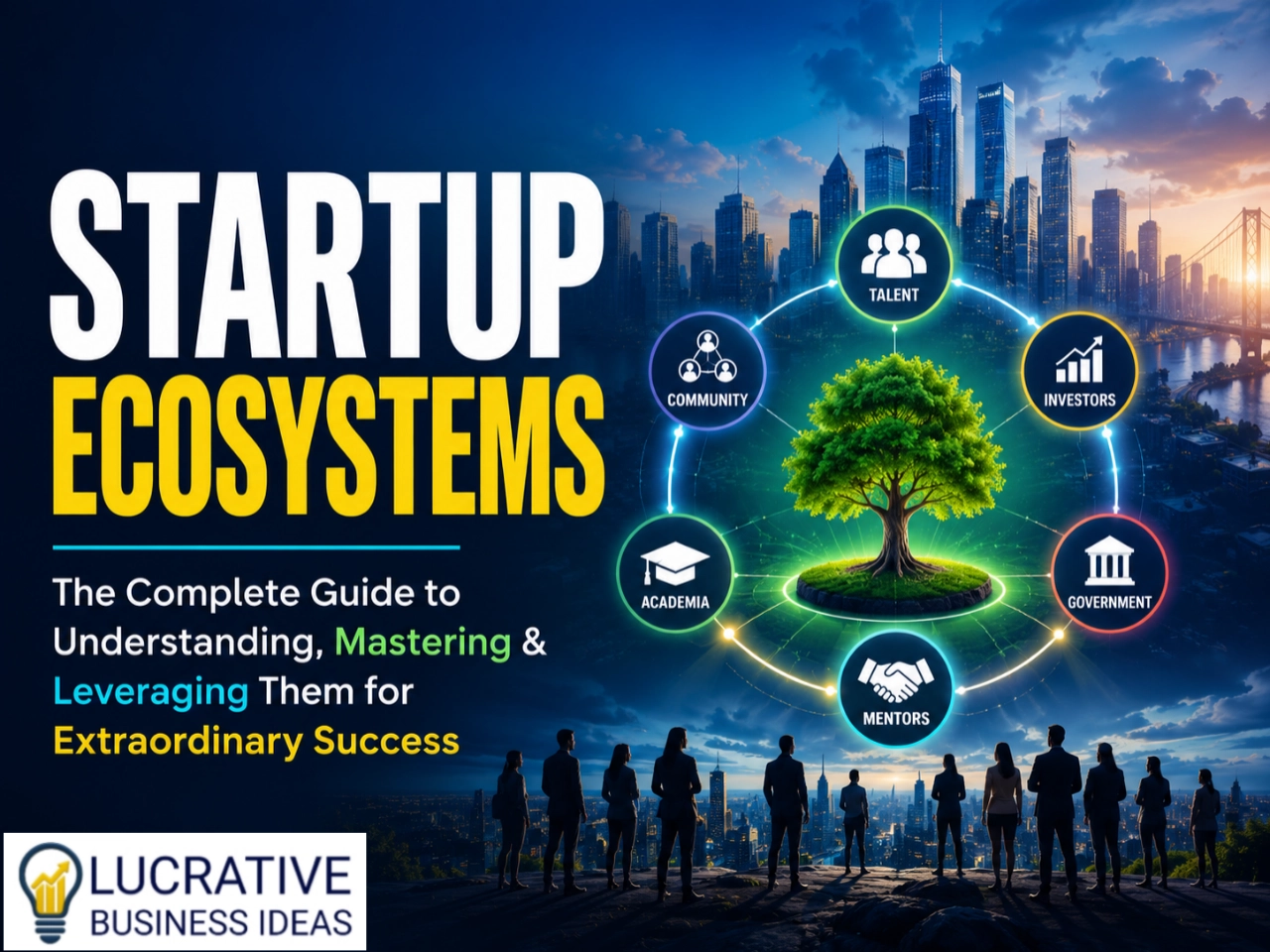
A startup ecosystem is a network of interconnected individuals, organizations, institutions, resources, and support systems that help entrepreneurs create, launch, grow, and scale businesses.
Think of it as a living business environment where different participants work together, intentionally or unintentionally, to support innovation and entrepreneurship.
Just as plants grow better in fertile soil than in barren land, startups thrive better in strong ecosystems than in isolation.
A healthy startup ecosystem includes:
- Entrepreneurs
- Investors
- Customers
- Universities
- Government agencies
- Mentors
- Incubators
- Accelerators
- Coworking spaces
- Service providers
- Technology companies
- Research institutions
- Startup communities
- Media organizations
When these components interact effectively, innovation flourishes.
Why Startup Ecosystems Exist
Historically, entrepreneurs had to figure everything out themselves.
Today, business has become more complex.
Founders need:
- Capital
- Technology
- Talent
- Market access
- Regulatory knowledge
- Partnerships
- Mentorship
No single entrepreneur possesses all these resources.
Startup ecosystems emerged because collaboration creates faster growth than isolation.
The ecosystem acts as an infrastructure that supports entrepreneurial success.
The Core Components of a Startup Ecosystem
1. Entrepreneurs
Entrepreneurs are the heart of every startup ecosystem. Without founders, there is no ecosystem.
Entrepreneurs create:
- New products
- New services
- New markets
- New jobs
- New innovations
Successful ecosystems continuously attract and produce entrepreneurs.
Examples include founders such as Steve Jobs, Bill Gates, Mark Zuckerberg, and Elon Musk.
2. Investors
Ideas need fuel. In business, fuel is capital.
Investors provide funding that enables startups to:
- Build products
- Hire employees
- Expand operations
- Enter new markets
Investor categories include:
- Angel Investors: High-net-worth individuals investing personal funds.
- Venture Capital Firms: Professional investment firms focused on high-growth startups.
- Corporate Investors: Large corporations investing strategically in startups.
- Crowdfunding Investors: Groups of individuals contributing smaller amounts collectively.
3. Universities and Research Institutions
Universities often become innovation factories.
They produce:
- Skilled graduates
- Research breakthroughs
- Patents
- Scientific discoveries
Many world-changing companies originated from universities.
Examples include:
- Yahoo
- Snap Inc.
Universities contribute knowledge and talent to ecosystems.
4. Accelerators
Accelerators help startups grow rapidly.
They usually provide:
- Mentorship
- Funding
- Training
- Networking
- Investor access
The goal is to compress years of learning into a few months.
5. Incubators
Incubators help very early-stage startups.
Unlike accelerators, they often focus on nurturing ideas before they become fully operational businesses.
They may offer:
- Office space
- Training
- Business support
- Legal assistance
- Advisory services
6. Government
Governments significantly influence startup success.
They create:
- Tax policies
- Business regulations
- Innovation grants
- Research funding
- Infrastructure
Countries with startup-friendly policies often attract more entrepreneurs.
Examples include Singapore, Israel, and Estonia.
7. Talent Pool
Every startup needs talented people.
This includes:
- Engineers
- Designers
- Sales professionals
- Marketers
- Product managers
- Financial experts
Strong ecosystems continuously generate and attract skilled workers.
8. Customers
Many founders overlook this. Customers are not outside the ecosystem. They are part of it.
Without customers:
- No revenue exists.
- No validation exists.
- No growth exists.
The best ecosystems provide easy access to paying customers.
9. Service Providers
Specialized service providers support startups.
Examples include:
- Lawyers
- Accountants
- Branding agencies
- Software consultants
- Recruitment firms
These professionals help startups avoid costly mistakes.
10. Startup Communities
Communities create the social infrastructure of entrepreneurship.
These include:
- Founder groups
- Meetups
- Conferences
- Industry events
- Online forums
Communities facilitate learning and collaboration.
The World’s Most Powerful Startup Ecosystems
1. Silicon Valley (The gold standard)
Located in Silicon Valley, this ecosystem combines:
- Capital
- Talent
- Universities
- Innovation culture
- Risk-taking mentality
Many global giants emerged here, including Apple, Google, Meta, and Netflix.
2. Israel’s Startup Nation
Israel transformed itself into one of the world’s leading innovation hubs.
Key strengths include:
- Deep technical expertise
- Strong military technology transfer
- Global market focus
- Venture capital support
3. Singapore
Singapore built a startup ecosystem through strategic government planning.
Advantages include:
- Business-friendly regulations
- Access to Asian markets
- Strong infrastructure
- Global talent attraction
4. London
London has become one of Europe’s strongest startup ecosystems.
Particular strengths include:
- Fintech
- Artificial intelligence
- Financial services
- Global connectivity
The Startup Ecosystem Lifecycle
Every ecosystem passes through stages.
Stage 1: Emergence
A few founders start innovative companies. Resources are limited. Success stories are rare.
Stage 2: Growth
More startups appear. Investors begin paying attention. Talent becomes available.
Stage 3: Expansion
Major exits occur. Successful founders reinvest. Capital flows increase.
Stage 4: Maturity
The ecosystem becomes self-sustaining. New companies emerge continuously. Global recognition follows.
How Entrepreneurs Can Master Startup Ecosystems
Understanding ecosystems is not enough.
You must learn how to use them strategically.
1. Become Highly Visible
Invisible entrepreneurs miss opportunities.
Attend:
- Conferences
- Workshops
- Networking events
- Startup competitions
Relationships often create opportunities before products do.
2. Build Strategic Relationships
The most valuable currency in startup ecosystems is trust.
Build relationships with:
- Investors
- Founders
- Mentors
- Industry experts
- Potential customers
Many opportunities arise through introductions.
3. Give Before You Ask
One of the biggest mistakes founders make is constantly asking for help without creating value.
Successful ecosystem participants:
- Share knowledge
- Make introductions
- Help others solve problems
People remember contributors.
4. Learn Ecosystem Mapping
Map your ecosystem.
Identify:
- Investors
- Accelerators
- Government grants
- Industry associations
- Universities
- Media outlets
Know where every opportunity exists.
5. Join Communities Aggressively
The fastest learning often comes from peers.
Join:
- Founder groups
- Industry associations
- Online startup communities
- Professional networks
Collective intelligence beats individual intelligence.
6. Find Mentors
Mentors compress decades of experience into practical advice.
Good mentors help you:
- Avoid mistakes
- Expand networks
- Improve decision-making
- Accelerate growth
One good mentor can save years of struggle.
7. Leverage Accelerators and Incubators
Many founders underestimate these programs.
The benefits include:
- Investor exposure
- Structured learning
- Credibility
- Partnerships
The right accelerator can dramatically accelerate growth.
8. Build a Personal Brand
Investors increasingly invest in founders they know and trust.
Create visibility through:
- Industry articles
- Public speaking
- Podcasts
- Thought leadership
People support entrepreneurs they recognize.
How Investors Use Ecosystems
Professional investors rarely invest randomly.
They use ecosystems to:
- Discover opportunities
- Evaluate founders
- Monitor industries
- Access deal flow
The strongest investment opportunities often emerge from ecosystem relationships long before the public notices them.
How Governments Use Startup Ecosystems
Governments support startup ecosystems because startups create:
- Jobs
- Innovation
- Tax revenue
- Economic growth
- Global competitiveness
Countries that nurture entrepreneurship tend to outperform those that rely solely on traditional industries.
The Biggest Startup Ecosystem Mistakes
1. Working Alone
Isolation slows growth.
2. Chasing Funding Before Validation
Investors want evidence. Customers matter first.
3. Ignoring Community
Relationships create leverage.
4. Building Without Market Feedback
Customers are ecosystem participants. Use them.
5. Networking Only When You Need Something
This damages trust. Build relationships continuously.
The Future of Startup Ecosystems
The next decade will look very different from the last.
Several forces are reshaping startup ecosystems:
1. Artificial Intelligence
AI is lowering barriers to company creation. Small teams can now achieve what once required hundreds of employees.
2 Remote Work
Talent can participate globally. Physical location matters less than before.
3. Global Capital
Investors increasingly fund startups regardless of geography.
4. Digital Communities
Online ecosystems are becoming as influential as physical ecosystems.
5. Creator Economy
Individuals can build audiences before building companies. This changes how startups launch and grow.
The Ultimate Secret About Startup Ecosystems
Most people think startups succeed because of great ideas. That is only partially true.
Great ideas matter. Execution matters. Timing matters. But ecosystems multiply all of these.
A weak founder inside a world-class ecosystem can sometimes outperform a strong founder working completely alone.
The smartest entrepreneurs do not simply build companies.
They build positions within ecosystems. They become known. They become trusted. They become connected. They become valuable contributors.
Once that happens, opportunities begin flowing toward them instead of them constantly chasing opportunities.
That is the real power of startup ecosystems. And that is why mastering an ecosystem may be one of the highest-return business decisions an entrepreneur can ever make.
See Also:
- Lean Startup Methodology Explained: How to Master & Apply It Successfully in a New Business
- All About First Principle Thinking & Other Powerful Problem-Solving Frameworks Used By Entrepreneurs & Other Successful People
Final Thought
The most successful entrepreneurs do not simply build products or companies—they build relationships, networks, and strategic positions within thriving ecosystems.
Understanding how startup ecosystems work, and learning how to contribute value within them, can unlock opportunities that no amount of hard work alone can create.
In today’s interconnected world, mastering the ecosystem is often as important as mastering the business itself.
Frequently Asked Questions (FAQs) About Startup Ecosystems
1. What exactly is a startup ecosystem, and why is it important?
A startup ecosystem is a network of people, organizations, institutions, and resources that support the creation and growth of new businesses. It includes entrepreneurs, investors, mentors, universities, government agencies, incubators, accelerators, service providers, customers, and startup communities.
Startup ecosystems are important because they provide entrepreneurs with access to resources that would be difficult to obtain alone. Instead of building a company in isolation, founders can tap into networks, funding opportunities, mentorship, talent pools, strategic partnerships, and market access.
A strong ecosystem can significantly increase a startup’s chances of survival and long-term success by reducing common obstacles and accelerating growth.
2. Can a startup succeed without being part of a startup ecosystem?
Yes, a startup can succeed outside a formal ecosystem, but doing so is usually much more difficult. Entrepreneurs who operate alone often face challenges such as limited access to funding, lack of mentorship, difficulty recruiting talent, and slower market penetration.
Being part of an ecosystem does not guarantee success, but it provides advantages that can dramatically improve a company’s growth trajectory.
Many successful founders actively seek ecosystem support because it helps them avoid costly mistakes, identify opportunities faster, and build valuable relationships that contribute to long-term growth.
3. What is the difference between an incubator and an accelerator?
Although the terms are often used interchangeably, incubators and accelerators serve different purposes.
Incubators typically focus on helping entrepreneurs in the earliest stages of business development. They assist founders in refining ideas, validating business models, and building the foundations of a startup. Incubator programs may last several months or even years.
Accelerators, on the other hand, are designed for startups that already have a product, customers, or some market traction. They provide intensive mentoring, networking opportunities, investor access, and sometimes seed funding over a fixed period, often three to six months. The goal is to accelerate growth and prepare startups for scaling or fundraising.
4. How do investors fit into a startup ecosystem?
Investors play a critical role by providing the capital startups need to develop products, hire employees, expand operations, and enter new markets. However, experienced investors offer more than money.
Many investors provide strategic guidance, industry connections, customer introductions, recruitment support, and access to future funding opportunities. Because investors interact with numerous startups and industries, they often possess valuable insights that can help founders make better decisions.
In healthy startup ecosystems, investors act as catalysts that fuel innovation and business growth.
5. What are the biggest mistakes entrepreneurs make when trying to leverage startup ecosystems?
One of the most common mistakes is treating networking as a transactional activity. Some founders only reach out to people when they need money, introductions, or favors.
Another major mistake is focusing exclusively on fundraising while neglecting customers and product development. Investors are generally more interested in startups that demonstrate market demand and execution capability.
Other common mistakes include ignoring mentorship opportunities, failing to participate in startup communities, refusing to collaborate with other founders, and not investing time in building a professional reputation within the ecosystem.
6. How can a first-time entrepreneur become part of a startup ecosystem?
The best way to enter a startup ecosystem is through active participation. Entrepreneurs can attend startup events, workshops, conferences, hackathons, pitch competitions, and networking sessions. Joining online communities, founder groups, and professional associations can also provide valuable connections.
Building genuine relationships is essential. Instead of focusing solely on what you can gain, look for ways to contribute by sharing knowledge, offering assistance, making introductions, or supporting other entrepreneurs. Over time, trust and visibility will naturally increase, creating access to more opportunities within the ecosystem.
7. Why do some startup ecosystems produce more successful companies than others?
The strength of a startup ecosystem depends on the quality and interaction of its components. Strong ecosystems typically have abundant capital, experienced mentors, skilled talent, supportive government policies, active startup communities, and access to large markets.
They also tend to have a culture that encourages innovation, calculated risk-taking, and collaboration. Successful founders often reinvest their wealth, knowledge, and experience into the next generation of entrepreneurs, creating a cycle of continuous growth and innovation.
Weak ecosystems, by contrast, may lack funding, mentorship, infrastructure, or a culture that supports entrepreneurship.
8. How can entrepreneurs benefit from startup ecosystems even if they live in developing countries?
The rise of digital technology has significantly reduced geographic barriers. Entrepreneurs can now participate in global startup ecosystems through virtual accelerators, online communities, remote networking events, digital mentorship programs, and international funding platforms.
Founders in developing countries can build relationships with investors, customers, and partners worldwide without relocating. They can also leverage local ecosystems while simultaneously participating in global ecosystems, creating a powerful combination of local knowledge and international opportunity.
The modern entrepreneur is no longer limited by location.
9. What role does personal branding play in startup ecosystems?
Personal branding has become increasingly important because people invest in, partner with, and support founders they know and trust. A strong personal brand can attract investors, employees, customers, media attention, and strategic partnerships.
Entrepreneurs can build their personal brands by sharing insights, publishing content, speaking at events, participating in industry discussions, and consistently demonstrating expertise. Over time, a strong reputation can create opportunities that would otherwise require years of networking and outreach.
In many cases, a founder’s credibility becomes one of the startup’s most valuable assets.
10. What does the future of startup ecosystems look like?
The future of startup ecosystems is becoming increasingly global, digital, and decentralized. Artificial intelligence, remote work, cloud technologies, and online communities are reducing traditional barriers to entrepreneurship.
Future ecosystems will likely be less dependent on physical locations and more focused on digital collaboration. Entrepreneurs will have greater access to global talent, international customers, remote investors, and virtual support networks.
At the same time, ecosystems that successfully combine strong local communities with global connectivity will have a significant competitive advantage. The entrepreneurs who learn to navigate both physical and digital ecosystems will be best positioned to thrive in the coming decades.