

Every day, thousands of people open trading accounts hoping to make quick profits in the financial markets.
They watch YouTube videos, follow social media traders, and jump into the markets believing success is only a few trades away.
But the harsh reality is this: Nearly 90% of beginner traders lose their entire trading capital within their first year.
Not because the market is impossible to beat. But because they unknowingly repeat the same five devastating mistakes that destroy trading accounts over and over again.
These mistakes are silent account killers. They slowly drain capital, confidence, and discipline until the trader finally quits.
The good news? Once you understand these traps, you can avoid them and dramatically improve your chances of surviving—and eventually thriving—in the markets.
In this article, you’ll discover the five biggest mistakes that cause most beginner traders to blow their accounts and what smart traders do differently.
Here are the 5 biggest mistakes that cause about 90% of beginner traders to blow their accounts:
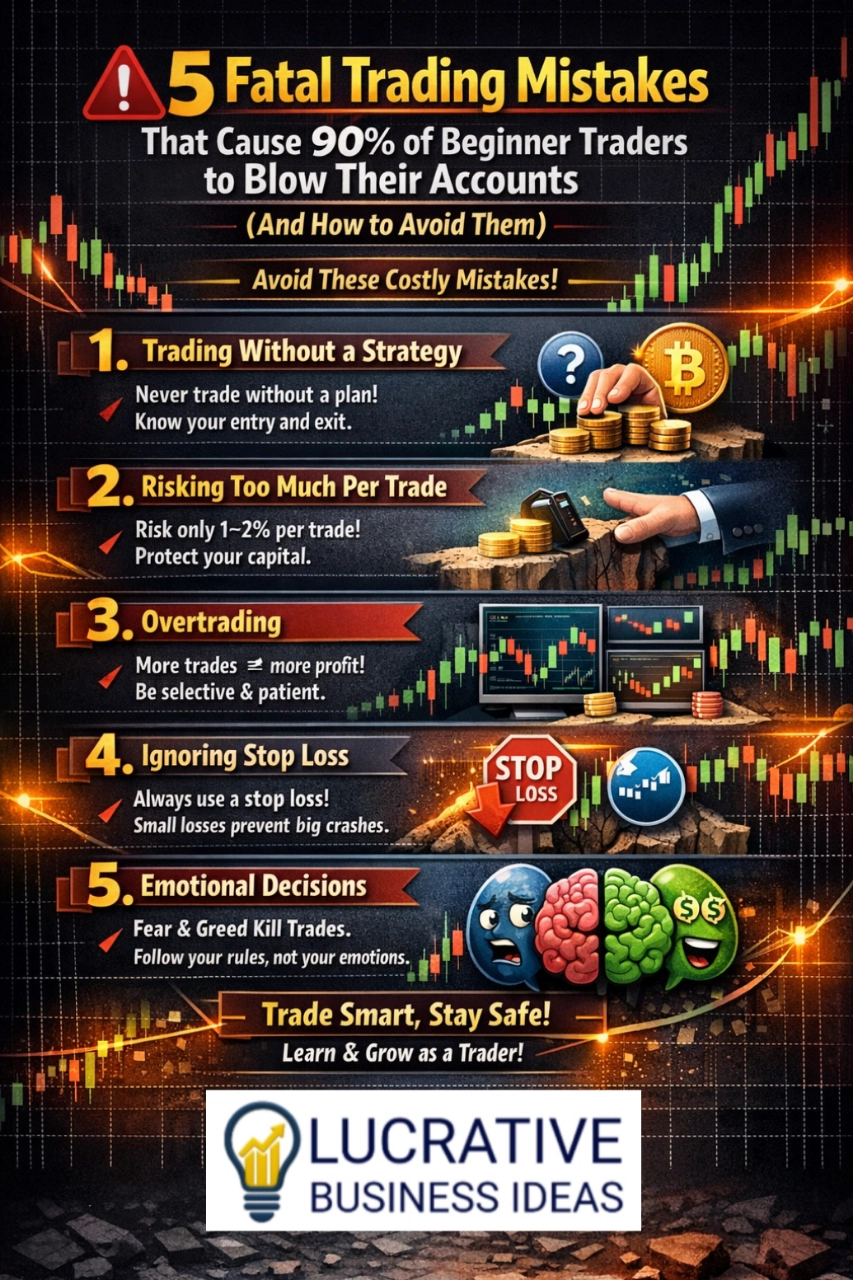
1. Trading Without a Strategy
Many beginners enter trades based on:
- Social media tips
- Emotions
- Random guesses
This is basically gambling. Professional traders always have a clear strategy.
Example strategy:
- Trade only breakouts.
- Trade only pullbacks in a trend.
- Trade only at support or resistance.
Even when trading assets like Bitcoin, professionals follow a defined system.
Lesson: Never trade unless you know why you are entering and why you will exit.
2. Risking Too Much Per Trade
This mistake destroys accounts quickly. Beginners often risk 20–50% of their capital on one trade.
One loss can wipe out the account. Professional traders usually risk only 1–2% per trade.
Example:
- Account: $500
- Risk per trade: $10
This allows traders to survive many losses.
Lesson: Trading is a long game, not a single bet.
3. Overtrading
Many beginners think more trades = more profit. In reality, it usually means more mistakes.
Professionals are very selective. Some traders take only 3–5 good trades per week.
Signs of Overtrading
- Trading out of boredom
- Forcing trades
- Entering without clear setups
4. Ignoring Stop Loss
A stop loss is your safety net. Beginners often remove stop losses because they believe the market will reverse. This can lead to massive losses.
Example: A trader buys Ethereum expecting it to rise. Instead of closing the trade, they keep holding while price keeps falling.
One bad trade can destroy months of profit.
Lesson: A small loss today prevents a catastrophic loss tomorrow.
5. Letting Emotions Control Decisions
Fear and greed are the biggest enemies in trading.
Fear causes traders to exiting profitable trades too early. Greed causes traders to holding trades too long.
Successful traders follow rules instead of emotions.
The Harsh Truth About Trading
Statistics show that most new traders lose money during their first year.
The reason is not intelligence. It is discipline and risk management.
The One Rule That Keeps Traders Alive
Professional traders follow this simple principle: “Protect your capital at all costs.”
If you protect your money, you always have another opportunity to trade.
See Also:
- 6 Powerful Psychological Tricks Professional Traders Use to Stay Profitable While Most Beginners Lose Money
- 7 Beginner Trading Setups Professionals Use to Win Consistently (Step-by-Step Guide)
Conclusion
Trading success rarely comes from luck or secret indicators. It comes from discipline, risk management, emotional control, and patience.
The truth is simple: Most traders don’t fail because the market is unfair. They fail because they repeat the same costly mistakes without realizing it.
By avoiding the five mistakes discussed in this article, you already place yourself ahead of the majority of beginners who continue to trade blindly.
Remember this: The goal of a beginner trader is not to get rich quickly. The goal is to survive long enough to become skilled.
Master your risk. Control your emotions. Follow a proven strategy. And over time, the markets can become one of the most powerful wealth-building tools available.



Emotional trading definitely messes with a lot of beginners. I’ve been there—feeling on top of the world after a few good trades and then going all-in, only to lose it all. Being mindful of emotions is something I’m working on more now.
This breakdown of the 5 biggest trading mistakes really hit home—especially the point about trading without a strategy. I’ve seen too many beginners jump in headfirst, thinking they can just follow the latest trend or tip. The reality is, having a clear plan and sticking to it is what separates surviving traders from those who blow their accounts. It’s a harsh but necessary lesson for anyone serious about trading.