
Every life leaves a story, but only a few leave a blueprint. Chris Oyakhilome is one of those rare individuals whose journey blends vision, faith, discipline, and strategy into a model for influence and impact.
From a humble beginning in Edo State, Nigeria, through early challenges, to becoming a global spiritual leader and entrepreneur, his life is a masterclass in persistence, leadership, and strategic thinking. Along the way, he faced adversity, embraced innovation, learned from failures, and built systems, media platforms, and economic engines that transformed not only his life but the lives of millions across the world.
This article unpacks his journey in twelve pivotal sections, revealing not just the milestones, but the lessons, strategies, and mindset that any leader, entrepreneur, or changemaker can apply. It’s more than a biography—it’s a roadmap for sustained influence and legacy.
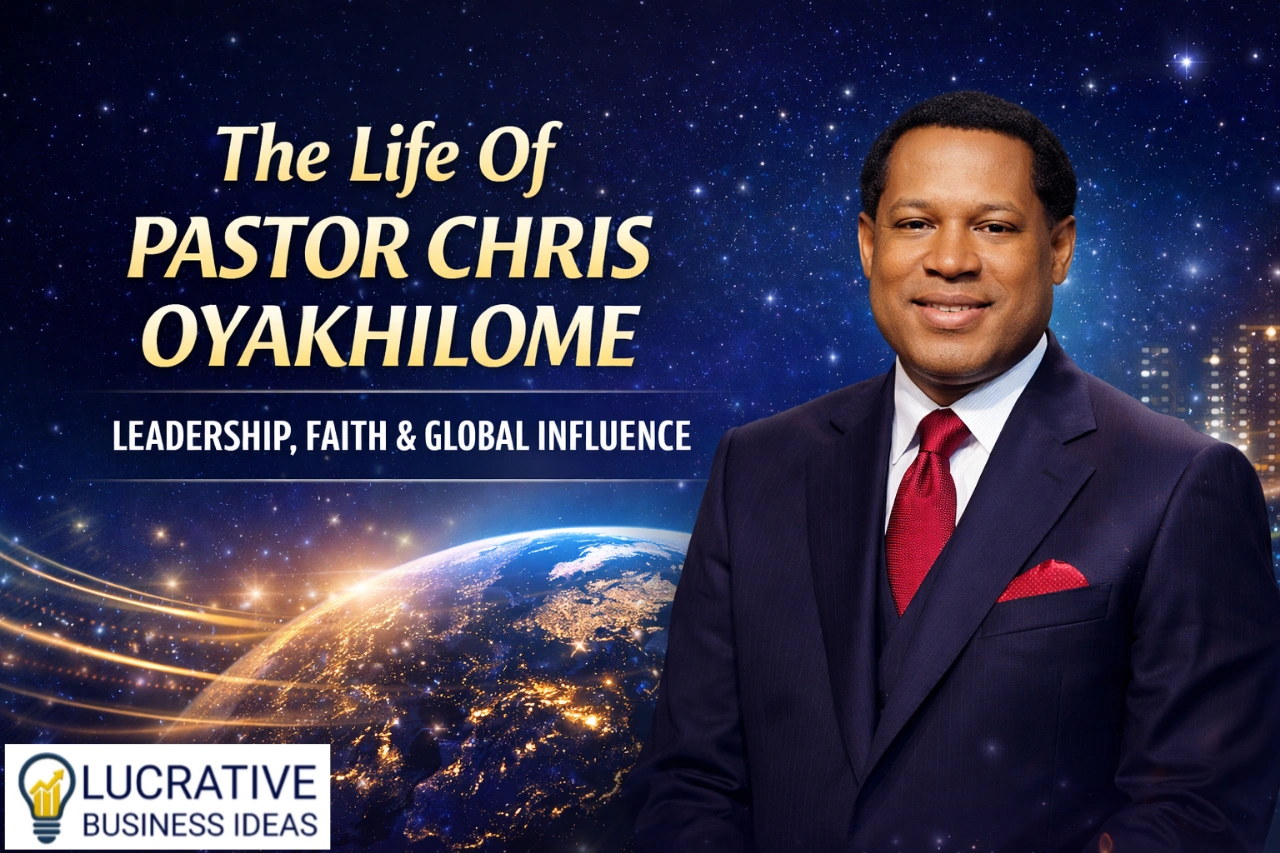
The Full Roadmap: Key Phases of Pastor Chris Oyakhilome’s Life Story
Here’s how we’ll break his life into meaningful, notable phases/sections:
- Origins & Formation (Birth, Family, Early Influences, and Mindset Development)
- The Call to Ministry (Spiritual Awakening, Early Convictions, and Confirmation of Calling)
- The Humble Beginnings of Ministry (Early Struggles, Small Starts, and Early Opposition)
- Building an Organization (Leadership, Systems, Team-Building, and Structure)
- Media, Technology & Expansion (How Scale Was Achieved Through Innovation)
- Entrepreneurship & Business Ventures (What Worked, What Didn’t, and Why)
- Breakthrough Years (The Turning Points That Changed Everything)
- Globalization of the Ministry Brand (From Local Ministry to Global Movement)
- Crises, Controversies & Leadership Tests (Public Scrutiny, Legal Challenges, and Resilience)
- Wealth Creation & Asset Building (Revenue Streams, Media Assets, Organizational Wealth)
- Leadership Philosophy & Strategy (How He Thinks, Decides, and Scales Influence)
- Legacy, Influence & Succession (Long-Term Impact, Systems That Outlive the Founder)
SECTION 1 – Origins & Formation: Birth, Family, Early Influences, and Mindset Development
Chris Oyakhilome was born on December 7, 1963, in Edo State, Nigeria. Long before stadiums, television networks, and international conferences, there was simply a boy growing up in a modest Nigerian household. His parents were devout Christians, and faith was not an occasional activity in their home—it was the atmosphere he breathed.
This detail matters more than people think.
Many leaders later describe a “sudden calling,” but in reality, leadership is often incubated quietly over years. In Chris’s early life, church wasn’t entertainment—it was formation. Scripture, prayer, and Christian service were normal rhythms. This kind of environment does something subtle but powerful: it wires the mind to see faith as practical, not theoretical.
He was known to be intellectually curious and unusually expressive for his age. He showed early signs of confidence in speaking and organizing small groups. These traits didn’t come from nowhere. They were sharpened through involvement in church youth activities and school leadership roles. Even as a teenager, he reportedly enjoyed teaching the Bible to peers and organizing informal prayer groups.
Now here’s where the entrepreneur in me leans forward:
Nothing about his early environment was glamorous. There was no wealth, no elite schooling, no political connections. What he had was exposure, repetition, and responsibility. That’s how leaders are made in real life—through small responsibilities, repeated daily, in uncelebrated environments.
When he later attended university, he carried this internal framework with him: faith as a serious life assignment, not a hobby. Many people encounter ideas in adulthood and struggle to embody them. He grew up practicing what later became his public mission.
This is the quiet season most biographies rush past. But seasoned builders know:
Foundations don’t look impressive until the building is tall.
Actionable Lessons from Section 1 (Life, Business, and Leadership)
Here’s what a serious entrepreneur, minister, or builder can take from this early stage of his life:
1. Your Environment Is Training You—Whether You Notice or Not. Most people underestimate how much their daily environment shapes their future behavior.
Action: Curate your environment intentionally. What you watch, listen to, and repeat daily is quietly programming your future decisions.
2. Leadership Starts in Small Rooms. Before platforms come living rooms, classrooms, and small groups.
Action: Take small leadership roles seriously. How you handle ten people is how you’ll handle ten thousand.
3. Repetition Builds Identity. Faith wasn’t just taught to him; it was practiced daily. The same principle applies in business.
Action: Don’t wait for big opportunities to start practicing excellence. Practice the habits now that your future self will need.
4. Don’t Romanticize “Humble Beginnings”—Use Them. Hard, ordinary beginnings often produce resilience and adaptability.
Action: Instead of resenting your current limitations, mine them for skills: communication, resourcefulness, discipline, and self-leadership.
5. Early Exposure Beats Late Motivation. Motivation fades. Early exposure builds instinct.
Action: Expose yourself early to the environment you want to master—whether it’s leadership, ministry, investing, or enterprise.
SECTION 2 -The Call to Ministry: Spiritual Awakening, Early Convictions, and Confirmation of Purpose
By the time Chris Oyakhilome entered university, the seeds planted in childhood had begun to press for direction. This is the season when many people feel a tug toward purpose—but few have the discipline to slow down and listen to it.
For him, this period wasn’t marked by a dramatic stage moment or a sudden spotlight. It was quieter. More demanding. He spoke often of an inner conviction—a persistent sense that his life was meant for more than personal success. Not in the vague, inspirational way people talk about destiny, but in a practical, disruptive way that forces decisions. He felt drawn toward ministry, toward teaching the gospel, toward giving structure to something that, at the time, existed mostly as an inner fire.
Here’s the part most biographies sanitize:
Calling is inconvenient.
It doesn’t arrive with a salary package, social approval, or a neat roadmap. In those early days, choosing ministry meant choosing uncertainty. There was no guarantee of growth, no assurance of financial stability, and no clear endorsement from powerful institutions. There was simply conviction—and conviction demands courage. So he tested it.
He didn’t quit life to “wait for a sign.” He started small. He taught the Bible in informal gatherings. He led prayer meetings. He paid attention to results. Were people actually helped? Did their lives change? Did the message carry weight beyond emotion? Over time, the feedback loop became clear: people responded. Not to hype—but to substance. That response became part of how he confirmed the call. Results don’t create calling, but they can confirm alignment.
This is a principle seasoned builders understand:
Clarity often comes after movement, not before it.
He began to take responsibility for organizing fellow students, coordinating small fellowships, and giving structure to what would otherwise remain scattered enthusiasm. In doing so, he was learning leadership before he had a title for it. He learned how to gather people, communicate a vision, manage conflict, and stay consistent when the novelty wore off. Those skills later became the backbone of something far larger.
What’s also worth noting—because real history includes tension—is that conviction didn’t spare him doubt. There were seasons of inner wrestling: “Is this emotional impulse or genuine direction?” Mature leaders don’t pretend doubt doesn’t exist. They build decision-making frameworks to work through it. He leaned into prayer, counsel, and practical testing. Over time, consistency in inner conviction and external fruit settled the matter.
From an entrepreneurial lens, this phase mirrors the earliest stage of any meaningful venture:
- You sense an opportunity or calling.
- You test it with small experiments.
- You gather feedback from real-world results.
- You refine your commitment as evidence accumulates.
That’s not mysticism. That’s disciplined discernment.
By the end of this season, the call to ministry was no longer a private thought. It had become a public direction. He wasn’t yet leading a global movement. He was leading people in rooms. But the direction of his life had changed permanently.
Big futures usually begin with small, awkward obedience.
Actionable Lessons from Section 2 (For Life, Ministry, Business, and Investing)
Here’s what decades of building leaders and enterprises have taught me—and what this phase of his life reinforces:
1. Calling Is Often Inconvenient—That’s How You Know It’s Real. If your “calling” fits perfectly into comfort, approval, and safety, question it.
Action: Pay attention to the ideas and paths that stretch you rather than flatter you.
2. Don’t Wait for Perfect Clarity—Test in Small Ways. He didn’t wait for a global platform. He tested his conviction in small rooms.
Action: Pilot your ideas. Run small experiments. Let reality refine your direction.
3. Use Feedback Loops, Not Just Feelings. He watched how people responded to his teaching.
Action: Build feedback into your work—customers, users, mentors. Feelings start movements; feedback sustains them.
4. Results Don’t Create Purpose—But They Can Confirm Alignment. Fruit doesn’t define calling, but it can validate fit.
Action: Track outcomes. If nothing improves around your effort, adjust your approach, not just your motivation.
5. Leadership Is Practiced Long Before It’s Recognized. Organizing small groups trained him for later scale.
Action: Treat every small leadership moment as training for a larger stage.
6. Clarity Follows Motion. Most people wait for certainty before acting. Builders move, then learn.
Action: Take the next responsible step. Direction sharpens with movement.
SECTION 3 – The Humble Beginnings of Ministry: Early Struggles, Small Starts, and the Grind Nobody Sees
When Chris Oyakhilome first stepped into ministry leadership, there was no applause waiting for him. No sponsors. No media coverage. No polished systems. Just a handful of students, borrowed spaces, and a conviction that felt far larger than the room he stood in.
This is the phase most success stories rush through because it’s uncomfortable to sit in. The beginning is rarely romantic. It’s repetitive, underfunded, and invisible to the world. Meetings were small. Attendance fluctuated. Sometimes the same faces showed up; sometimes nobody did. And when you’re building something that claims to carry divine purpose, those empty chairs can feel like personal rejection.
Here’s the historian’s truth:
Every movement that looks inevitable in hindsight once looked fragile in real time.
He and the early team met in ordinary university classrooms and small halls. There were logistical problems—no stable venue, no reliable equipment, limited finances. Programs had to be announced manually. Follow-up was inconsistent. People drifted in and out. The work was slow, and the results were uneven. Momentum didn’t come in a clean upward line; it came in small surges, followed by plateaus, followed by moments of discouragement.
And yet, something crucial was happening beneath the surface:
Systems were being forged under pressure.
He learned how to run meetings on time, how to organize volunteers, how to follow up with people who disappeared, how to communicate vision when enthusiasm dipped. He learned that passion without structure burns out fast. So he began to introduce simple order—roles, schedules, accountability, basic training. Nothing fancy. Just enough structure to keep the fire from dying out.
There was also resistance. Not the dramatic kind you see in movies, but the everyday resistance that kills most dreams: skepticism, indifference, and quiet criticism. Some questioned his youth. Others questioned his methods. A few questioned whether he should even be doing this at all. That kind of pressure doesn’t make headlines, but it shapes leaders. It forces you to clarify why you’re doing what you’re doing when no one is cheering you on.
From an entrepreneurial lens, this was the “bootstrap phase.” No capital. No brand. No leverage. Just effort, learning, iteration, and persistence. This is where most ventures die—not because the idea is wrong, but because the process is slow and the feedback is humbling.
What separated him from the many who start and quit was not talent alone. It was stamina.
He kept showing up. He kept teaching. He kept organizing. He kept improving the structure of the work. And slowly—quietly—the small group became a community. The community began to stabilize. Consistency created trust. Trust created growth. Not explosive growth yet—but real growth.
Breakthroughs don’t announce themselves when they’re being built. They whisper while you’re doing the boring work.
Actionable Lessons from Section 3 (For Entrepreneurs, Leaders, Ministers, and Builders)
This phase holds some of the most practical lessons you’ll ever use:
1. Expect the Beginning to Be Ugly. If your early stage looks messy, underfunded, and awkward, you’re probably doing it right.
Action: Stop waiting for perfect conditions. Start with what you have and improve as you go.
2. Empty Rooms Are Part of the Process. Low turnout and slow traction aren’t signals to quit—they’re signals to learn.
Action: Treat early failures as data. Ask what can be improved, not whether you should exist.
3. Passion Without Structure Burns Out. Energy starts movements. Systems sustain them.
Action: Build simple systems early—schedules, roles, follow-ups, accountability. Don’t wait for scale to introduce order.
4. Resistance Is a Filter, Not a Curse. Skepticism forces you to refine your message and your methods.
Action: Use criticism to sharpen clarity. Don’t waste energy trying to impress people who aren’t building with you.
5. Consistency Beats Brilliance. Showing up repeatedly builds trust faster than occasional brilliance.
Action: Design routines you can sustain, even on low-energy days.
6. The Bootstrap Phase Trains Real Leaders. When you have no resources, you learn to maximize effort, creativity, and discipline.
Action: Don’t despise small budgets and limited tools. They train you to become resourceful before you become powerful.
SECTION 4: Building an Organization: From Passion to Systems, From Crowd to Culture
When momentum finally began to form around Chris Oyakhilome, a new kind of pressure appeared. Early growth is flattering. Sustained growth is demanding. A small fellowship can run on enthusiasm and goodwill. An organization cannot.
This is where many founders stumble. They love the fire of beginnings but resist the discipline of structure. He didn’t have that luxury. As attendance grew and activities multiplied, cracks started to show. Meetings overlapped. Volunteers burned out. Messages became inconsistent. Good intentions were no longer enough to hold things together.
So he made a quiet but critical shift:
He began to build systems, not just moments.
Roles were defined. Leaders were trained. Teams were formed. Schedules were standardized. Communication lines were clarified. The work was still spiritual in purpose, but operational in method. That distinction matters. Purpose answers the “why.” Systems handle the “how.” Without the “how,” the “why” collapses under its own weight.
This period demanded a new identity from him. He could no longer function only as a gifted teacher. He had to become an organizer of people, a developer of leaders, and a steward of structure. That transition is painful for many visionaries. You go from being the center of everything to building something that can run without you in every room. Ego takes a hit. But scale requires surrender.
He invested heavily in leadership development. Not just enthusiasm, but competence. People were taught how to lead others, manage programs, resolve conflicts, and carry responsibility without constant supervision. This created a pipeline. Instead of one leader trying to do everything, many leaders began to carry the work. That’s when growth stops being fragile and starts becoming durable.
From a business perspective, this is the leap from founder-led hustle to organization-led execution.
Here’s the historian’s pattern you see across movements, companies, and institutions:
- Charisma starts the fire.
- Structure keeps it burning.
Without structure, growth becomes chaos. Without culture, structure becomes cold bureaucracy. The balance is the art. In this phase, culture was being shaped—how people treated each other, how excellence was defined, how responsibility was honored, how mistakes were handled. Culture decides whether people stay when things get hard.
There were missteps, of course. Some leaders weren’t ready. Some systems didn’t work. Some processes had to be torn down and rebuilt. But that’s how organizations mature—through iteration. What mattered was the willingness to build infrastructure before crisis forced it.
This phase doesn’t look dramatic from the outside. There are no headlines for “We improved our internal systems.” But inside the engine room, this is where future scale is quietly engineered.
You don’t scale impact by shouting louder. You scale impact by building something that works when you’re not shouting at all.
Actionable Lessons from Section 4 (For Founders, Leaders, Entrepreneurs, and Builders)
These are hard-earned lessons that separate small operations from enduring institutions:
1. Passion Starts Things—Systems Keep Them Alive. Enthusiasm can launch you. It can’t carry you indefinitely.
Action: Start building simple systems early—roles, processes, reporting, schedules. Don’t wait for chaos to force your hand.
2. You Must Evolve from Doer to Builder of Doers. If everything depends on you, you don’t have an organization—you have a bottleneck.
Action: Train people to replace you in key tasks. Measure success by how well things run without your direct involvement.
3. Leadership Pipelines Create Scale. Growth accelerates when leadership multiplies.
Action: Develop leaders intentionally. Create training paths and mentoring rhythms instead of hoping leaders “just emerge.”
4. Culture Is Strategy in Disguise. How people behave when you’re not watching determines your real direction.
Action: Define and model your values early. Reward behaviors that reflect your culture, not just results.
5. Build Infrastructure Before You’re Desperate. Waiting until things break to build systems is expensive.
Action: Regularly audit your operations. Ask: “What will break if we double in size?” Then fix that first.
6. Iterate Without Ego. Some systems will fail. That’s not weakness—it’s feedback.
Action: Treat processes as experiments. Keep what works. Kill what doesn’t. Improve relentlessly.
SECTION 5 – Media, Technology & Expansion: How Reach Multiplies When You Learn to Scale Your Voice
There comes a moment in every growing movement when the room gets too small for the message. For Chris Oyakhilome, that moment arrived when physical gatherings could no longer carry the weight of what was being built. The demand for his teaching outpaced geography. People wanted access beyond the walls of a hall or the limits of a city. That’s when the strategy shifted—from gathering people to reaching them.
This was not a cosmetic upgrade. It was a structural pivot.
He leaned into media early—print, audio, broadcast—long before it was fashionable for ministries in his context to think like media companies. Sermons were recorded. Messages were packaged. Distribution channels were built. Over time, this matured into dedicated media platforms and, eventually, broadcast networks, most notably LoveWorld Incorporated and its global television arm, LoveWorld Television Network (often called LoveWorld TV).
Here’s the strategic insight most leaders miss:
Media doesn’t just amplify your message. It reshapes your organization.
Once you commit to broadcast and digital distribution, you inherit new responsibilities—production quality, scheduling discipline, technical teams, content planning, audience feedback, and regulatory realities. This pushed the organization to professionalize further. Creative talent had to be developed. Engineers had to be hired. Producers had to learn how to package a message for audiences who weren’t already inside the building.
This is the entrepreneur’s playbook in action:
If you want scale, you must adopt the operating standards of scaled industries.
Media also changed the growth curve. Instead of one leader speaking to thousands in a room, the same message could reach millions across borders. Geography stopped being a ceiling. Time stopped being a barrier. Content became an asset that worked while people slept. That’s leverage—the kind every serious business builder studies.
Of course, expansion brings scrutiny. Media makes you visible. Visibility invites critics, regulators, and competitors. Mistakes that once stayed local now travel at the speed of broadcast. This phase required thicker skin, better governance, and clearer messaging. Influence without maturity becomes liability. Influence with discipline becomes power.
The historian’s pattern shows up again:
Movements that master media shape culture. Movements that ignore media are shaped by it.
By investing in technology and distribution, he effectively turned a ministry into a media enterprise. That decision multiplied reach, accelerated growth, and created durable platforms that outlived individual events. The message became portable. The audience became global. The organization learned to think in systems of scale rather than rooms of attendance.
If you want to change lives at scale—whether through products, services, or ideas—you don’t just need conviction. You need channels.
Actionable Lessons from Section 5 (For Entrepreneurs, Investors, Founders, and Leaders)
This phase offers some of the sharpest strategy lessons you’ll ever get:
1. Distribution Is as Important as the Product. A great message without reach stays small.
Action: Obsess over distribution channels—media, platforms, partnerships. Don’t just build value; build access.
2. Media Forces Professionalism. Once you go public, sloppiness becomes expensive.
Action: Upgrade your standards before exposure forces you to. Invest in quality, governance, and technical competence.
3. Content Can Become a Scalable Asset. Recorded knowledge works while you sleep.
Action: Turn your expertise into reusable content—courses, media, products. Build assets that compound over time.
4. Scale Brings Scrutiny—Prepare for It. Visibility attracts critics and regulation.
Action: Strengthen your ethics, compliance, and leadership maturity as your reach grows. Don’t wait for a crisis to clean up operations.
5. Technology Removes Geography as a Ceiling. Physical location no longer limits impact.
Action: Design your business or mission to work digitally. Build for global access from the start, even if you begin local.
6. Think Like the Industry You Want to Enter. Ministry with media must think like media. Business with software must think like software.
Action: Study the operating models of the industries you’re stepping into—and upgrade your organization to match them.
SECTION 6 – Entrepreneurship & Business Ventures: Where Vision Meets Markets, and Faith Meets Cash Flow
When people talk about Chris Oyakhilome, they often separate “ministry” from “business,” as if the two exist in different worlds. In real life, they don’t. Scale costs money. Media costs money. Infrastructure costs money. Ideals without economic engines remain small and fragile.
This is where the conversation gets more serious—and more honest.
As the ministry expanded, it naturally gave birth to business-like ventures: publishing operations, media production arms, event logistics companies, training programs, broadcast infrastructure, and content distribution platforms. Some of these initiatives were formally structured as organizational units under LoveWorld Incorporated; others functioned as commercial-style enterprises that supported the broader mission. The lines between ministry and enterprise blurred, not because of greed, but because scale demands sustainability. Not every venture worked cleanly.
Early publishing efforts struggled with distribution inefficiencies and inconsistent cash flow. Media production in its infancy was expensive, technically demanding, and prone to operational mistakes. Some projects ran ahead of their revenue models. Others underestimated regulatory complexity. There were seasons where ambition moved faster than infrastructure, and costs outpaced returns. This is not scandal—it’s startup reality. Builders learn by burning capital and correcting course.
But here’s what separates durable enterprises from vanity projects: Learning cycles.
Over time, the organization learned to professionalize operations—budgeting more rigorously, hiring specialized talent, separating creative vision from financial management, and building revenue models that could sustain long-term media and event operations. Broadcast platforms matured into structured networks. Publishing evolved into repeatable production and distribution systems. Conferences became predictable revenue-generating engines that also reinforced the brand.
From an investor’s lens, this was the shift from passion projects to portfolio thinking.
- Some ventures were core: media networks, publishing, events, and training ecosystems.
- Some were experimental: initiatives that tested new markets or delivery models.
- Some were sunset: projects that didn’t justify continued capital and focus.
What’s often misunderstood is that successful founders don’t avoid failure—they manage exposure to it. They place small bets, observe results, double down on what works, and shut down what doesn’t. Over time, the portfolio tilts toward winners.
There’s also a deeper leadership lesson here:
He didn’t try to personally run every business arm. He learned to delegate commercial leadership to specialists. Creatives handled content. Operators handled logistics. Financial professionals handled budgets and compliance. Vision remained centralized; execution became distributed. That’s how institutions outgrow founders without collapsing under them.
This phase forged economic engines that allowed the ministry’s global activities—broadcasting, publishing, large-scale events—to operate with financial continuity rather than constant fundraising panic. Sustainability replaced scramble. Strategy replaced improvisation.
In the long run, influence that can’t pay its own bills doesn’t last. Sustainable impact requires sustainable economics.
Actionable Lessons from Section 6 (For Entrepreneurs, Founders, Investors, and Builders)
This is where vision becomes accountable to reality:
1. Separate Vision from Operations. Founders carry vision. Specialists run systems.
Action: Hire or partner with people who are better than you at operations, finance, and compliance. Let each person play to their strength.
2. Expect Some Ventures to Fail. Failure is not moral failure—it’s market feedback.
Action: Treat early projects as experiments. Cap your downside. Learn fast. Kill weak ideas quickly.
3. Build Revenue Models Before You Scale Costs. Ambition without cash flow creates fragility.
Action: Design clear monetization and sustainability paths before expanding infrastructure or headcount.
4. Think in Portfolios, Not One Big Bet. Diversification stabilizes growth.
Action: Spread risk across multiple initiatives. Double down on proven performers; sunset underperformers without sentimentality.
5. Professionalize Early. Spiritual or social missions still need business-grade operations.
Action: Introduce budgeting, reporting, governance, and compliance sooner than feels necessary. Discipline compounds.
6. Sustainable Impact Requires Sustainable Economics. You can’t change the world on goodwill alone.
Action: Build economic engines that support your mission so you’re not perpetually dependent on emergency funding.
SECTION 7 – The Breakthrough Years: When Preparation Quietly Turns Into Momentum
Breakthrough is rarely a single explosion. More often, it’s the moment when years of invisible preparation finally line up and begin to compound. For Chris Oyakhilome, the breakthrough years arrived when structure, media leverage, leadership depth, and economic engines began to reinforce one another.
From the outside, it looked sudden. Attendance surged. Conferences filled massive venues. Broadcast reach expanded beyond national borders. The ministry’s footprint spread across continents through LoveWorld Incorporated and its media platforms. But insiders knew better. This was not luck. This was delayed visibility.
What changed in this phase wasn’t just size—it was velocity.
Earlier seasons were about survival and system-building. This season was about scale. Messages moved faster than people could travel. Content reached homes that had never hosted a physical meeting. Local leaders, trained in prior years, carried the work into new cities and countries. The organization no longer depended on one room, one city, or one schedule. It functioned like a network.
Here’s the historian’s pattern again:
Breakthrough happens when bottlenecks are removed.
Leadership bottlenecks were loosened through training pipelines. Distribution bottlenecks were broken by broadcast and digital platforms. Financial bottlenecks eased as revenue models stabilized. When enough bottlenecks are removed at once, growth accelerates. That acceleration feels like a miracle to observers, but to builders, it feels like the reward for patience.
This period also brought public recognition and, with it, new pressure. Larger platforms magnify both impact and mistakes. Every word travels further. Every decision echoes longer. Governance had to mature. Messaging had to tighten. Crisis management became part of leadership, not an occasional emergency. Influence had become real weight.
From an investor’s lens, this is the compounding phase.
Early investments in people, systems, and channels begin to yield nonlinear returns. The cost of reaching the next million people becomes lower than the cost of reaching the first thousand. That’s the magic of scale—unit economics improve as infrastructure matures.
But here’s the quiet truth most people miss:
Breakthrough years are dangerous years.
Ego can creep in. Complexity can overwhelm. Success can tempt leaders to outrun their own governance. The organizations that survive breakthrough are the ones that keep upgrading their internal discipline as fast as their external growth. Momentum without maturity burns hot—and then burns out.
In this phase, the work shifted from proving the vision to stewarding the platform. The question was no longer, “Can this grow?” The question became, “Can this be sustained without collapsing under its own weight?” That’s a higher class of leadership problem—and a more expensive one to solve.
Breakthrough doesn’t mean the work is finished. It means the work has changed.
Actionable Lessons from Section 7 (For Entrepreneurs, Founders, Investors, and Leaders)
This is where many promising ventures either become institutions—or flame out:
1. Breakthrough Is Built, Not Wished Into Existence. What looks sudden is usually delayed payoff.
Action: Keep building when results are slow. Compounding rewards consistency.
2. Remove Bottlenecks to Unlock Scale. Growth accelerates when constraints are addressed systematically.
Action: Identify your biggest bottleneck—leadership, distribution, capital, systems—and fix that before chasing new growth.
3. Scale Improves Economics—If Systems Are Ready. The cost of reach drops when infrastructure matures.
Action: Invest early in systems that improve unit economics as you grow.
4. Upgrade Governance as Fast as You Grow. Visibility multiplies risk.
Action: Strengthen accountability, compliance, and decision frameworks before success forces the issue.
5. Don’t Let Momentum Outrun Maturity. Fast growth without internal discipline leads to collapse.
Action: Pair every expansion move with an internal upgrade—people, processes, and controls.
6. Steward the Platform, Don’t Worship It. Platforms are tools, not trophies.
Action: Keep your mission clear and your ego in check as influence grows.
SECTION 8 – Globalization of the Ministry Brand: Crossing Borders Without Losing Your Center
Global expansion is where many strong local movements lose their soul. What works in one culture can fracture in another. What feels authentic at home can sound foreign abroad. For Chris Oyakhilome, taking the ministry global wasn’t just about planting flags in new countries—it was about learning how to carry a message across cultures without diluting its core.
By this stage, the machinery of scale was already in motion through LoveWorld Incorporated and its media ecosystem. But globalization forced a deeper evolution. Language, culture, legal systems, and leadership norms vary widely across regions. What worked in Nigeria couldn’t simply be copy-pasted into South Africa, the UK, North America, or parts of Asia. Expansion demanded localization.
This is where many founders overreach. They assume success at home equals success everywhere. History says otherwise. Empires fail when they export structure without translating culture.
So the approach shifted from replication to adaptation. Local leaders were empowered. Regional teams were trained to carry the vision in culturally intelligent ways. Content was localized in language and presentation. Organizational standards remained consistent, but delivery became flexible. The center held the values; the edges handled the context.
From a business perspective, this is the classic “global strategy, local execution” model.
Media again played a decisive role. Broadcast platforms allowed the message to arrive before the physical presence did. Digital distribution created familiarity before formal expansion. By the time physical branches and conferences were established in new regions, there was already an audience that recognized the brand and trusted the voice. That reduced market entry friction—something every global company aims for.
But globalization also raised the cost of mistakes. Legal compliance varied by country. Public scrutiny intensified in Western media environments. Cultural missteps traveled fast. The organization had to mature its governance, legal awareness, and public relations posture. This wasn’t just ministry anymore; it was multinational operations.
The historian’s pattern is clear:
Global reach requires local legitimacy.
No movement survives globally by central control alone. It survives by building capable local leadership that can interpret the mission faithfully in their own context. That takes humility from founders. It requires letting go of control while tightening clarity. Vision stays centralized; execution becomes decentralized.
This phase transformed a fast-growing movement into a global brand. Not just known in many places, but embedded through local leaders, localized media, and regional infrastructure. The work stopped being about exporting events and started being about building ecosystems.
You don’t go global by being everywhere at once. You go global by learning how to belong in places you didn’t start.
Actionable Lessons from Section 8 (For Global Entrepreneurs, Investors, and Builders)
If you’re thinking about scaling across borders, these lessons are non-negotiable:
1. Don’t Copy-Paste Success Across Cultures. What works at home can fail abroad.
Action: Localize delivery while protecting core values. Hire cultural insiders, not just loyal followers.
2. Build Local Leadership Before You Build Local Presence. People, not buildings, carry culture.
Action: Invest in regional leaders who can translate your mission into local language, norms, and realities.
3. Use Media to Lower Market Entry Friction. Familiarity reduces resistance.
Action: Let your content travel ahead of your physical presence. Build trust before you build infrastructure.
4. Centralize Vision, Decentralize Execution. Control kills global adaptability.
Action: Hold the “why” tightly and the “how” loosely. Let local teams own execution.
5. Upgrade Governance for Multinational Complexity. Different countries mean different rules and risks.
Action: Invest in legal, compliance, and public relations capacity before expansion exposes your blind spots.
6. Global Scale Demands Humility. Founders must learn to lead through others.
Action: Measure success by how well the mission thrives without your direct involvement in every region.
SECTION 9 – Crises, Controversies & Leadership Tests: What Pressure Reveals About Power
There is a point in every public leader’s journey when growth invites storms. Visibility multiplies scrutiny. Influence attracts critics. For Chris Oyakhilome, the years of expansion were followed by seasons of controversy, legal disputes, and intense public debate. This wasn’t unique to him. It’s the tax paid by anyone who operates at scale in politics, business, or religion.
History teaches a blunt lesson:
The higher the platform, the louder the noise.
As his global presence expanded through LoveWorld Incorporated and its media reach, disagreements that might once have stayed private became public events. Legal battles around personal matters, public criticism over teachings and public statements, and clashes with regulators and media commentators placed leadership under a microscope. Some controversies were fueled by genuine concern. Others were amplified by sensationalism. Either way, the pressure was real.
This phase tested more than reputation. It tested governance.
When organizations grow faster than their compliance and crisis-response systems, they bleed credibility. Every misstep becomes content for critics. Every unclear policy becomes a liability. Leaders who survive these seasons do so not by avoiding storms—but by learning to weather them with steadier structures and clearer communication.
From an investor’s point of view, this is reputational risk management. Markets punish organizations that ignore governance. The same principle applies to movements and institutions. Trust is an asset. Once damaged, it is expensive to repair.
There were moments when public messaging had to be tightened, legal counsel strengthened, and internal policies clarified. This is the unglamorous work of institutional adulthood. Founders who rely only on charisma during crisis burn through goodwill quickly. Those who build strong governance outlast the headlines.
There’s also a personal leadership lesson here:
Pressure reveals patterns you didn’t know you had.
Crisis exposes temperament, decision-making habits, and the health of inner life. Some leaders grow defensive. Others grow reflective. The leaders who endure are those who learn to slow down under pressure, separate signal from noise, and respond strategically rather than emotionally.
The historian’s pattern is consistent across centuries:
Institutions that survive controversy are the ones that mature through it. Institutions that deny reality repeat the cycle.
This phase didn’t end the work. It reshaped it. Crisis forced upgrades—in governance, communication discipline, legal awareness, and internal accountability. That’s not weakness. That’s evolution under fire.
Storms don’t disqualify leaders. How leaders handle storms determines whether they remain leaders.
Actionable Lessons from Section 9 (For Founders, CEOs, Public Leaders, and Investors)
If you’re building anything visible, you’ll face storms. Prepare for them:
1. Visibility Creates Reputational Risk. Influence multiplies scrutiny.
Action: Treat reputation as an asset. Invest in governance, compliance, and clear communication early.
2. Charisma Can’t Replace Systems in a Crisis. Personality doesn’t scale under pressure.
Action: Build crisis-response protocols, legal counsel access, and internal accountability before you need them.
3. Separate Signal from Noise. Not every critic is wrong. Not every critic deserves attention.
Action: Create a small, trusted advisory circle to help you discern what to address and what to ignore.
4. Upgrade Communication Discipline. Loose words travel far at scale.
Action: Tighten messaging. Train spokespeople. Document positions. Assume everything you say can become public.
5. Let Crisis Mature Your Leadership. Pressure reveals your weak spots.
Action: Use crises as mirrors. Fix internal habits and structural gaps exposed by stress.
6. Governance Is Not Bureaucracy—It’s Protection. Rules protect institutions from the limits of leaders.
Action: Strengthen oversight, policies, and compliance as you grow. It’s cheaper than repairing trust later.
SECTION 10 – Wealth Creation & Asset Building: Turning Influence Into Sustainable Resources
Influence without resources is fragile. Scale without sustainability is temporary. For Chris Oyakhilome, the lesson was clear: building a global ministry required building economic engines alongside spiritual impact. This is the phase where faith, vision, and discipline intersected with the hard realities of finance, investment, and asset stewardship.
By this stage, the organization operated multiple revenue-generating arms: media networks, publishing houses, conferences, training programs, and content platforms. Each of these was designed not merely to cover costs, but to fund growth and reinvest in the mission. Early entrepreneurial experiments—some successful, some costly—had taught him the critical principle of allocating resources intelligently.
Here’s the key distinction:
He built institutional wealth, not just personal wealth.
Institutional wealth is about creating assets that endure beyond an individual’s personal income. Real estate, media infrastructure, publishing rights, broadcast licenses, digital platforms, and global networks became part of this portfolio. Each asset served dual purposes: they supported the mission operationally and provided financial stability for expansion. This isn’t vanity. This is strategic resilience.
Financial discipline was part of the formula. Budgets were enforced. Investments were scrutinized. Revenue streams were diversified to avoid dependency on a single source. Cost overruns were tracked and corrected. The principles of financial sustainability were applied as rigorously as the principles of spiritual teaching.
He also leveraged partnerships intelligently. High-value collaborations with regional leaders, media partners, and event sponsors amplified capacity without diluting control. This is classic leverage: do more with less by aligning resources strategically.
The outcome was a ministry that could think in decades, not quarters. It could plan long-term global events, invest in emerging markets, and create media products with multi-year impact. The infrastructure and assets ensured that influence wasn’t hostage to donations, attendance swings, or temporary popularity.
From a historian’s perspective, this mirrors patterns seen in lasting institutions: wealth is built not to glorify the founder, but to enable sustained mission and influence. Without it, global reach collapses under operational cost. With it, vision becomes enduring.
In short: influence + assets + financial discipline = sustainable impact.
Actionable Lessons from Section 10 (For Entrepreneurs, Investors, Founders, and Leaders)
Wealth creation is not separate from influence—it powers it. Here’s how to translate vision into sustainable resources:
1. Build Institutional Wealth, Not Just Personal Income. Assets that survive you are more valuable than transient cash.
Action: Acquire and build resources—media, real estate, intellectual property—that support long-term goals.
2. Diversify Revenue Streams. Relying on a single income source is fragile.
Action: Identify multiple aligned revenue streams to stabilize operations and fund growth.
3. Treat Finance as Strategy, Not Accounting. Money decisions determine whether vision survives.
Action: Apply disciplined budgeting, ROI analysis, and investment planning to all initiatives.
4. Leverage Partnerships to Amplify Impact. Collaboration multiplies resources without overextending control.
Action: Align with partners who complement your capabilities and share your mission.
5. Invest in Assets That Support Operations. Every asset should do double duty: enable the mission and create value.
Action: Prioritize investments in infrastructure, content platforms, and intellectual property that generate long-term returns.
6. Plan Decades Ahead, Not Just Quarters. Influence and sustainability require vision beyond the next event.
Action: Create multi-year plans for financial growth, asset acquisition, and global expansion. Let long-term stability guide short-term decisions.
SECTION 11 – Leadership Philosophy & Strategy: How Vision, People, and Discipline Drive Enduring Influence
Influence without structure is fleeting. Power without wisdom is dangerous. For Chris Oyakhilome, leadership was never about personal acclaim—it was about creating systems, training leaders, and making decisions that could sustain a global mission.
By this stage of his life, the ministry had grown into a multi-national organization with media platforms, publishing houses, conferences, and regional leadership teams.
Scaling to that level required a deliberate philosophy:
- Vision-Centered Leadership – Every initiative, every program, and every investment traced back to the core purpose: spreading the gospel in a way that transforms lives. Vision was not static; it was communicated continuously, revisited, and clarified to ensure alignment across thousands of team members.
- Decentralized Execution – While vision remained centralized, execution was distributed. Local leaders were empowered to adapt strategy to their contexts while remaining accountable to core principles. This balance between control and autonomy allowed the ministry to operate in multiple countries without collapsing under bureaucracy.
- Talent Development and Mentorship – Leaders were identified early, trained intensively, and mentored personally. By building a leadership pipeline, he ensured that institutional knowledge didn’t reside in one person but was embedded across the organization.
- Strategic Risk-Taking – Every expansion—media, business, or global outreach—was calculated. Risks were taken, but with contingency plans, financial prudence, and governance structures in place. This disciplined approach to risk prevented reckless decisions while allowing innovation.
- Discipline in Execution – Strategy is meaningless without consistent follow-through. Whether in events, broadcasting, publishing, or partnerships, attention to detail, accountability, and standards ensured that the ministry’s operations were predictable, reliable, and replicable.
- Crisis Readiness and Adaptability – Leadership isn’t proven in calm seas. It’s tested during storms. By establishing clear policies, legal frameworks, and communication channels, he created resilience to withstand controversies, legal scrutiny, and public pressure without derailing the organization’s mission.
From a historian’s lens, this philosophy mirrors what enduring institutions have demonstrated across centuries: clear vision, empowered teams, disciplined systems, and adaptive strategies produce leaders whose influence survives their personal presence.
From an entrepreneurial and investment perspective, the principle is identical: the same framework that allows a ministry to scale globally also allows companies, funds, and projects to grow sustainably—alignment, decentralization, mentorship, calculated risk, disciplined execution, and adaptive governance.
Leadership, in essence, became a multiplier. One well-trained leader empowered dozens, who empowered hundreds, who influenced thousands, all aligned to the same mission. That is how impact compounds.
Actionable Lessons from Section 11 (For Entrepreneurs, Investors, Founders, and Leaders)
1. Keep Vision Central and Clear. Every action should trace back to your core purpose.
Action: Regularly communicate your vision to your team, ensuring alignment in strategy and execution.
2. Decentralize While Maintaining Core Principles. Control execution, not outcomes.
Action: Empower leaders to make decisions locally, while holding them accountable to overarching standards.
3. Invest in Leadership Development. Sustainable growth depends on people, not just founders.
Action: Identify talent early, train rigorously, and mentor continuously to create a leadership pipeline.
4. Take Calculated Risks. Growth requires bold moves—but not recklessness.
Action: Evaluate opportunities strategically, plan contingencies, and manage exposure intelligently.
5. Discipline is Non-Negotiable. Ideas fail without execution.
Action: Build systems of accountability, measurement, and follow-through. Track results rigorously.
6. Prepare for Crisis and Adapt. Resilience is built before the storm.
Action: Establish legal, operational, and communication frameworks that allow the organization to adapt without chaos.
7. Leadership Multiplies When Structured. One leader can’t do everything; structured leadership scales influence.
Action: Design frameworks where trained leaders can operate independently while advancing the mission.
SECTION 12 – Legacy, Influence & Life Lessons: What Enduring Impact Looks Like
Every life of significance eventually reaches a stage where personal achievement becomes secondary to legacy—the mark left on people, institutions, and society. For Chris Oyakhilome, this phase isn’t about headlines, but about embedding principles, structures, and influence that outlive any single event or broadcast.
By now, he had created a global ministry with LoveWorld Incorporated at its core, media networks spanning continents, publishing houses, and leadership pipelines that stretched worldwide. But legacy is more than assets and networks—it’s the wisdom distilled from decades of trial, triumph, and turbulence.
Key elements of his enduring influence include:
- Institutional Structures – Organizations built to operate beyond the founder’s daily involvement. Systems, governance, and leadership pipelines ensure continuity.
- Global Reach With Local Relevance – Expansion succeeded because local leaders were empowered and cultural contexts were respected. Influence didn’t impose—it adapted.
- Financial Stewardship – Wealth and resources were managed to support long-term sustainability, not short-term display. Economic discipline amplified the mission rather than distracted from it.
- Crisis as Character – Leadership was tested in storms, controversies, and challenges, proving resilience, humility, and strategic thinking. Lessons learned became teachings shared with others.
- Mentorship and Talent Development – Leaders were trained, guided, and multiplied. Legacy isn’t just what you build—it’s who you develop to carry it forward.
- Faith and Vision Anchored in Action – Every principle, whether in ministry, business, or governance, was linked to purposeful action. Influence wasn’t abstract; it was tangible, measurable, and replicable.
From a historical perspective, lasting figures are those who combine vision with structures, charisma with discipline, and ambition with strategy. They don’t just shine—they create systems that shine long after they are gone.
From an entrepreneurial lens, the principle is identical: a sustainable venture is one where influence, capital, and people are aligned so that impact continues, even if the founder steps back. The goal is multiplier effect—one life catalyzes thousands, who catalyze millions.
Legacy is not the applause you get today. It’s the influence you leave behind tomorrow.
Actionable Lessons from Section 12 (For Entrepreneurs, Leaders, Investors, and Change-Makers)
1. Build Institutions, Not Dependence on Yourself. Sustainable impact requires structures that outlast personal involvement.
Action: Create leadership pipelines, governance frameworks, and replicable processes.
2. Respect Local Contexts While Scaling Globally. Legacy isn’t about imposition; it’s about relevance.
Action: Empower local leaders and adapt strategies to cultural realities.
3. Steward Resources With Purpose. Financial discipline turns influence into sustainability.
Action: Align all investments and resources to long-term mission, not temporary glory.
4. Turn Crises into Lessons. Challenges reveal gaps and build resilience.
Action: Reflect on setbacks, document lessons, and integrate improvements into organizational culture.
5. Multiply Through Mentorship. Influence compounds through people.
Action: Identify talent, invest in development, and create mentorship structures to expand reach.
6. Link Vision to Action. Impact requires more than ideas; it requires execution.
Action: Ensure strategies are actionable, measurable, and replicable for consistent results.
7. Think Beyond Your Lifetime. Legacy is measured in influence that persists.
Action: Plan for continuity. Make every system, asset, and relationship capable of thriving without your constant supervision.
See Also:
- The Life of Steve Harvey: From Humble Beginnings to Global Success & Business Empire
- 50 Profitable Offline Business Ideas You Can Start Today with Low Capital
Conclusion
The story of Chris Oyakhilome is a study in alignment: aligning vision with strategy, faith with action, and influence with sustainability. His journey teaches us that true impact isn’t accidental—it’s built, nurtured, and disciplined over time.
From leadership and entrepreneurship to crisis management, wealth creation, and global influence, his life provides actionable lessons for anyone striving to lead, inspire, or create lasting change. More than the headlines, the wealth, or the media empire, the enduring lesson is simple: influence multiplies when preparation meets purpose, and legacy is the reward of consistent, disciplined action over decades.
Whether you are an entrepreneur, investor, leader, or dreamer, the principles embedded in his life offer a practical blueprint for building influence, impact, and institutions that outlast a lifetime.