

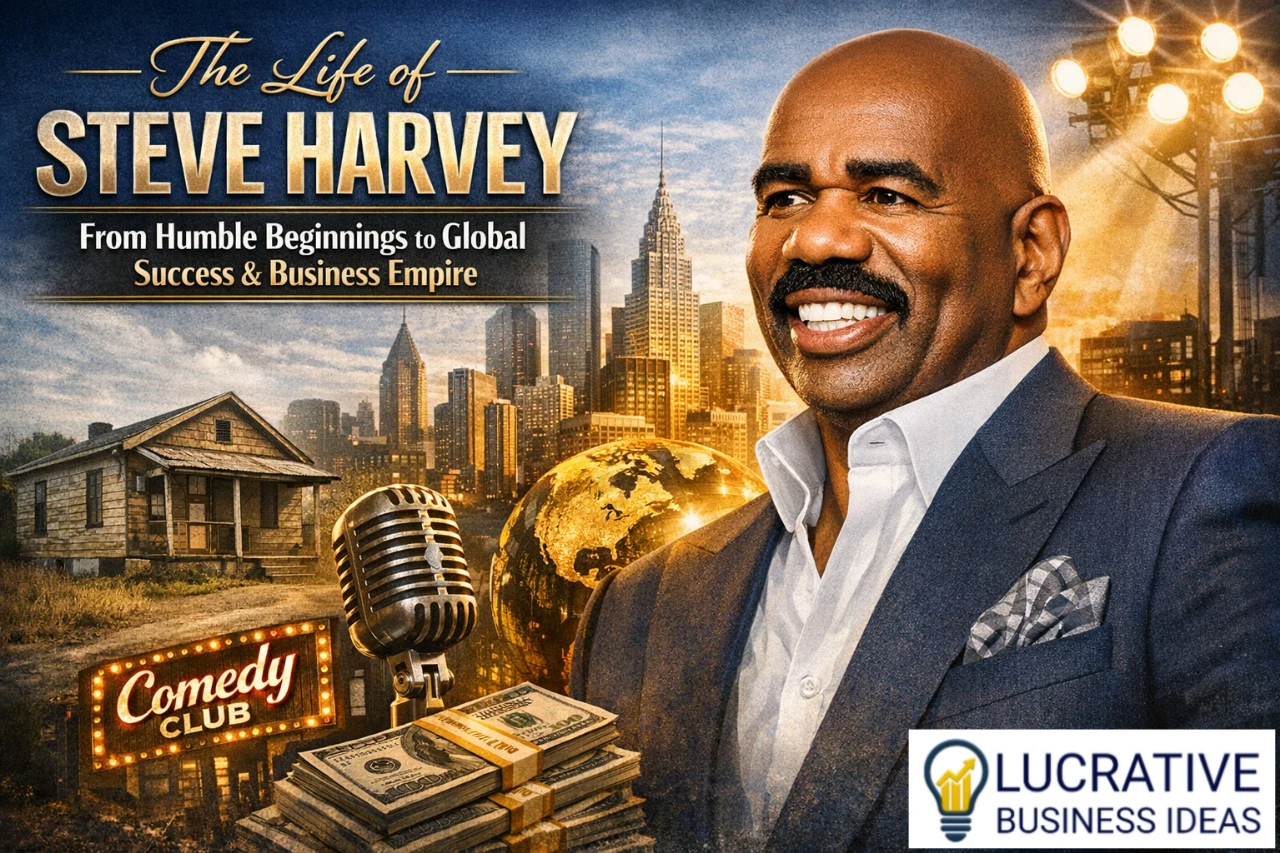
Steve Harvey’s journey is the story of grit, risk, failure, and extraordinary triumph. From a childhood marked by humble beginnings and early hardships to the bright lights of comedy clubs, sitcoms, and global fame, Harvey’s life is a masterclass in perseverance, strategy, and personal evolution.
He wasn’t born into privilege, nor did success arrive overnight. Homelessness, odd jobs, and years of rejection shaped the man who would later host Family Feud, run a national radio show, author best-selling books, and build a multi-platform media empire. Harvey’s life demonstrates that true success is not just about talent—it’s about vision, discipline, calculated risk, and the courage to turn adversity into opportunity.
This article traces his path step by step, offering actionable lessons for anyone looking to transform talent, influence, and determination into a sustainable, life-changing impact.
Phases of Steve Harvey’s Life & Business Journey
1. Roots & Formation (1957–1979) – Birth, family background, early environment, character formation.
2. Early Struggles & Survival Jobs (Late 1970s–1985) – Poverty, odd jobs, homelessness, and personal discipline.
3. From Silence to Stage: How Steve Harvey Found His Voice – How he overcame his stuttering challenge.
4. The Risky Leap into Comedy (Mid–1980s) – Choosing uncertainty over safety; first performances and failures.
5. Years of Rejection, Failure & Persistence (1986–1992) – Getting booed off stages, being broke, learning the craft.
6. First Breakthrough: Comedy Clubs & Showtime at the Apollo (Early 1990s) – The moment the world starts to notice him.
7. Scaling His Career: Sitcoms, Stand-Up Tours & Brand Building (1993–2005) – Turning talent into a repeatable income engine.
8. Business Expansion: Media, Books, Radio & Production Companies (2005–2014) – Transition from entertainer to media entrepreneur.
9. Mainstream Dominance: Family Feud, Global Fame & Licensing (2010s) – Building a globally recognizable personal brand.
10. Major Failures, Lawsuits & Reputation Crises – Business setbacks, public criticism, and how he handled controversy.
11. Wealth Strategy: Ownership, IP, Partnerships & Long-Term Leverage – How he structured his deals and protected upside.
12. Philosophy of Success: Faith, Vision, Risk & Identity – The mindset frameworks he credits for his success.
13. Legacy Thinking: Mentorship, Education & Giving Back – Creating impact beyond money.
14. Successful Business Brands & the Steve Harvey Empire – Overview of his businesses, brand ventures, and entrepreneurial success.
Let’s begin.
Section 1: Roots & Formation (1957–1979)
Birth, family background, early environment, character formation.
Steve Harvey was born in 1957 in Welch, West Virginia, and raised in a working-class family. His father worked as a coal miner, one of the most dangerous and physically demanding jobs in America at the time. This mattered. Children internalize what they see. He grew up watching a man trade physical health for financial survival.
Later, his family moved to Cleveland, Ohio, where economic pressure and social instability were part of daily life. This wasn’t a glamorous “origin story.” It was gritty. Limited resources. Limited safety nets. Limited exposure to “successful people.”
But here’s the subtle thing most people miss:
Even in tough environments, identity is forming.
As a child, Steve reportedly told people he wanted to be on TV one day. Everyone laughed. But that sentence mattered. It was a claim of identity before evidence existed.
Entrepreneurs do this all the time:
- “I’m going to build a company.”
- “I’m going to be wealthy.”
- “I’m going to be free.”
At this stage, he wasn’t building skills yet. He was building permission to dream bigger than his environment.
Actionable Lessons from This Phase
- Your environment shapes you, but it doesn’t get to define you. Most people unconsciously inherit the limits of their surroundings. Entrepreneurs consciously reject them.
- Identity comes before evidence. Before Steve Harvey had talent, money, or platforms, he had a self-concept. If you don’t decide who you are first, life will decide for you.
- Hard backgrounds build entrepreneurial stamina. Struggle isn’t just suffering—it trains you to tolerate uncertainty, discomfort, and delayed reward. Those are core startup skills.
- Your first business asset is imagination. Before capital, before skills, before connections—you need vision. If you can’t see a different future, you can’t build one.
Section 2: Early Struggles, Survival Jobs & Homelessness (Late 1970s–1985)
Poverty, odd jobs, sleeping in his car, building internal toughness.
After high school, Steve Harvey did not walk into success. He bounced between jobs that had no upward trajectory:
- Factory work
- Insurance sales
- Cleaning carpets
- Mailroom jobs
- Selling products door-to-door
- Any legal work that paid something that day
This phase is crucial for entrepreneurs to study because it exposes a harsh truth:
Most people don’t fail because they lack talent. They fail because they quit when survival pressure hits.
At one point, when he decided to pursue comedy full-time, his income collapsed. He couldn’t afford rent. He ended up living in his car for about three years. He slept in parking lots. He bathed in gas station sinks. He used gym memberships and friends’ places when possible. Some nights, he ate once a day.
This wasn’t “romantic struggle.” This was logistical suffering. Yet this period shaped two entrepreneurial muscles most people never build:
1. Psychological Endurance
Entrepreneurs romanticize “hustle,” but the real skill is endurance under humiliation and uncertainty.
Being homeless destroys your ego. It removes your social status. It isolates you.
Most people retreat to safety the moment life humiliates them. Steve Harvey didn’t interpret homelessness as “I failed.” He interpreted it as “This is the price of the direction I chose.”
That framing is everything in business. Startup founders go broke. Investors lose capital. Creators get ignored for years.
The question isn’t: “Can you win?” The real question is: “Can you survive long enough for your skills to compound?”
2. Resourcefulness Over Resources
He had no money. So he developed resource strategy:
- Where can I sleep safely?
- Where can I shower?
- Who can I call for one night of help?
- How can I turn $20 into gas, food, and stage time?
This is entrepreneurial thinking in raw form: When you don’t have resources, you build systems of survival.
This is the same muscle founders use when bootstrapping startups:
- No ad budget → they learn organic marketing
- No team → they become multi-skilled
- No capital → they negotiate better deals
Hardship trains creative problem-solving under pressure.
3. Decision Integrity
This phase tested one thing more than anything else: Was he truly committed to comedy—or just emotionally excited by the idea of success?
Many people like the idea of entrepreneurship. Few people accept the consequences of entrepreneurship:
- Financial instability
- Social doubt
- Family pressure
- Being misunderstood
- Years of invisibility
He could have gone back to stable work at any time. The fact that he didn’t is not about “bravery.” It’s about decision integrity—once he chose, he reorganized his life around that choice.
Actionable Lessons from This Phase
1. Separate discomfort from danger. Discomfort feels like danger—but it isn’t. Entrepreneurs who confuse the two retreat too early.
2. Build survival systems before scaling dreams. If you’re pursuing a risky path:
- Reduce fixed expenses
- Create backup income
- Build logistical resilience
Survival buys you time. Time buys you leverage.
3. Expect a “homeless phase” in some form. Not literal homelessness for everyone—but a phase of:
- Low money
- Low validation
- High doubt
If you’re in that phase now, it doesn’t mean you’re failing. It means you’re early.
4. Commitment is proven by what you’re willing to endure. Anyone can say “I want success.” Few people stay when the lifestyle contradicts the dream.
5. Poverty can teach strategy—or victimhood. Hardship teaches either: “The world is against me” (victim identity) or “I must become more strategic” (builder identity). Choose builder identity.
Section 3: From Silence to Stage: How Steve Harvey Found His Voice
How he overcame his stuttering challenge.
When people see Steve Harvey today—commanding stages, hosting prime-time television, and filling arenas with laughter—it’s easy to forget that his journey began with a voice he struggled to control.
As a boy growing up in Cleveland, Harvey battled a stutter that made speaking in class feel like stepping into a storm without shelter. Words caught in his throat. Laughter from classmates stung. Teachers sometimes mistook his silence for lack of confidence or ability. In reality, he had ideas, humor, and ambition—trapped behind hesitation.
History is full of entrepreneurs, leaders, and performers who began with a perceived disadvantage. Harvey’s stutter wasn’t just a childhood inconvenience; it shaped his relationship with risk. Speaking meant exposure. Exposure meant the possibility of ridicule. So, like many young people with a vulnerability, he learned to observe. He listened closely to rhythms of speech, timing of jokes, and how confidence could bend a room.
Over time, Harvey practiced relentlessly. He slowed his speech, rehearsed aloud, and leaned into humor as a tool—not just for entertainment, but for control. Comedy gave him a structure: setup, pause, punchline. Structure gave him safety. Safety gave him confidence. And confidence, repeated enough times, became competence.
When he finally stepped onto small comedy stages, he didn’t arrive fully formed. He stumbled. Some nights were rough. But each performance compounded his skill. The boy who once avoided speaking began to build a career on speaking for a living. That’s not a personality change; that’s disciplined transformation.
From an entrepreneurial lens, this is classic founder behavior. He took a constraint (speech difficulty), studied the mechanics of the game (timing, delivery, audience psychology), and iterated in public until the weakness became part of a distinctive edge. His voice—once uncertain—became recognizable, authoritative, and uniquely his.
Let me add this: societies often celebrate talent while overlooking the grind behind it. Harvey’s story fits a long pattern—people are remembered for the result, not the repetitions that forged it. The stutter didn’t disappear overnight; it lost power because he built systems and habits that made it irrelevant.
Actionable Lessons for Entrepreneurs, Business Builders, and Investors
1. Don’t wait for confidence—build competence. Confidence is a byproduct. Practice is the input. Put in enough reps, and confidence follows.
2. Turn constraints into strategy. Your weakness can become your edge if you design systems around it. Harvey used structure (timing, comedy formats) to manage uncertainty. Founders use processes, playbooks, and metrics for the same reason.
3. Iterate in public, learn in private. Early failures are tuition. Treat them as data, not as identity. Ship small. Improve fast.
4. Master the fundamentals of your craft. Harvey studied delivery, timing, and audience psychology. In business, fundamentals are your market, your customer, your unit economics. Flash without fundamentals is noise.
5. Build resilience to embarrassment. Embarrassment is a cost of growth. The people who win long-term have simply paid that cost more times than others were willing to.
6. Let repetition outwork fear.
Fear thrives in theory. It weakens in practice. Repetition doesn’t remove fear—it shrinks its influence.
7. Create a personal operating system.
Harvey’s structure for speaking is a reminder: design habits, routines, and frameworks that let you perform consistently—even on bad days.
If you’re building a company, a career, or a portfolio, remember this: your early limitations are not verdicts. They are raw material. The market doesn’t reward perfection—it rewards progress, compounding over time.
Section 4: The Risky Leap into Comedy (Mid–1980s)
By the mid-1980s, Steve Harvey had already faced a series of grueling personal challenges—homelessness, odd jobs, and constant financial stress. He had delivered furniture, sold insurance, and done anything to keep food on the table, yet none of it ignited his spirit. In his gut, he felt a restlessness—a whisper that he was meant for something bigger than survival, something uniquely his own.
Comedy was that “something.” But unlike the safe jobs he had known, comedy offered no guarantees. Clubs weren’t hiring unknown faces, audiences could be merciless, and the margin for failure was terrifyingly small. For someone with bills to pay and a family to think about, it was a leap of faith bordering on recklessness.
Steve’s first experiences on stage were far from glamorous. He bombed. Audiences laughed at the wrong moments—or didn’t laugh at all. There were nights he went home with bruised confidence and an empty wallet. Every failure was a mirror reflecting how far he had to go.
Yet, in that crucible of risk, he discovered something essential: his voice. Comedy wasn’t just about telling jokes—it was about connecting, observing life, and exposing truth in a way that resonated. Steve realized he didn’t have to fit into a mold; he had to sharpen his own. Slowly, the stage became both his teacher and his proving ground. The fear of uncertainty became fuel, not a barrier.
It was during these years that Steve Harvey learned what no classroom or office could teach: risk is not the enemy—inaction is. Talent without courage stays invisible. Success often begins when you stop playing it safe.
Actionable Lessons from Steve Harvey’s Risky Leap
1. Calculated Risk is Essential: Waiting for perfect conditions is a trap. Harvey’s leap into comedy was risky, but he evaluated his passion, talent, and drive before committing. In business or investing, calculated risk beats perpetual caution.
2. Failure is a Teacher, Not a Verdict: Bombed performances weren’t the end—they were feedback. Every misstep is data to refine your craft, product, or strategy.
3. Persistence Creates Opportunity: Few people saw potential in Steve Harvey in 1985. But persistence—the repeated showing up despite rejection—is what eventually gets doors to open.
4. Authenticity Attracts Success: Your unique voice, perspective, and style are your competitive advantage. Trying to mimic others wastes time; being authentic builds connection and long-term leverage.
5. Fear Can Be Fuel: Fear of failure, financial strain, or embarrassment can either paralyze you or propel you forward. Use it as a signal that you’re on the right track.
6. Leverage Small Wins: Even minor successes, like getting noticed in a small club, compound over time. Build momentum—one stage, one deal, one project at a time.
7. Vision Trumps Comfort: Staying in a safe but unfulfilling job feels secure but doesn’t move you toward your destiny. A clear vision of what you want enables courageous action.
In short, this stage of Steve Harvey’s life is not just about comedy—it’s a masterclass in taking the leap, embracing risk, and trusting that your unique value will find its audience. Anyone looking to build a career, a business, or a legacy must understand: your “mid-1980s” moment—where fear and opportunity collide—is where everything starts to change.
Section 5: Years of Rejection, Failure & Persistence (1986–1992)
After taking the daring leap into comedy, Steve Harvey quickly discovered that talent alone doesn’t guarantee success. The late 1980s were a gauntlet of rejection and relentless testing. He traveled from city to city, stage to stage, performing wherever he could get a spot—often in small clubs with hostile audiences. Hecklers would yell, audiences would sit in silence, and sometimes he left a stage feeling invisible and defeated.
Money was tighter than ever. Harvey would stay in cheap motels, subsist on minimal meals, and at times, sleep in his car or on the streets when funds ran out. Each day presented a choice: give in to despair or keep showing up. He chose the latter.
During this time, Steve made mistakes—bombed jokes, misread audiences, and endured humiliating public moments—but he also learned to refine his craft. He studied every performance, watched other comedians, and developed a keen sense of timing, delivery, and content that connected with real people.
One of the hardest lessons was humility. Every rejection forced him to strip away ego and pride, focus on growth, and embrace the grind. Harvey realized that persistence wasn’t just “showing up,” it was showing up with purpose—learning, adapting, and improving at every step.
By the early 1990s, his relentless persistence began to pay off. He started winning small competitions, appearing on local television, and building a network of mentors and supporters. These were quiet victories, invisible to most, but they were compounding. The foundation for his breakthrough was being built—not overnight, but through years of disciplined resilience.
Actionable Lessons from Steve Harvey’s Years of Rejection
1. Resilience is Non-Negotiable: Failure is inevitable. What separates the winners from the rest is the ability to get up, adapt, and keep moving forward.
2. Persistence Beats Talent Alone: Raw talent is worthless without sustained effort. Show up consistently, even when results aren’t visible.
3. Failure is Feedback: Bombed performances weren’t personal attacks—they were lessons. Every rejection contains insights to refine your strategy, business model, or craft.
4. Invest in Your Craft: Success requires intentional practice. Study, observe, rehearse, and learn from the masters in your field.
5. Humility Accelerates Growth: Pride keeps you from listening, adapting, and evolving. Rejection teaches humility, which in turn makes you coachable and strategic.
6. Build Incremental Wins: Small successes compound. Harvey’s first competition wins, TV spots, and club bookings were stepping stones to bigger opportunities. Apply the same principle in business: small deals, small product launches, and incremental improvements build momentum.
7. Network Strategically: While talent is important, relationships matter. Harvey cultivated mentors, peers, and supporters who could open doors when the time came.
8. Purpose Fuels Persistence: Without a clear “why,” the grind becomes unbearable. Harvey’s purpose—to rise above his circumstances and leave a legacy—carried him through hardship. Identify your purpose and let it drive you.
This period in Steve Harvey’s life is a masterclass in endurance under pressure. It’s a reminder that success is rarely immediate; it is forged in the daily discipline of showing up, learning, and refining while everyone else gives up.
Section 6: First Breakthrough: Comedy Clubs & Showtime at the Apollo (Early 1990s)
By the early 1990s, Steve Harvey’s grind was relentless. Years of rejection, long drives between small towns, and nights sleeping in motels or his car had honed more than his comedy—it had forged an unshakeable resolve. Then came the moment that would change the trajectory of his life: the stage at Showtime at the Apollo.
The Apollo Theater in Harlem wasn’t just a venue—it was a crucible of excellence, where careers were made or broken under the scrutiny of some of the toughest audiences in America. Steve stepped onto that stage carrying the weight of his past struggles, but also the clarity of his voice and his unique perspective on life.
The audience wasn’t gentle. Hecklers tested him. Silence hovered like a specter between jokes. Yet something remarkable happened: Steve’s authenticity, sharp observation, and timing began to connect. Laughter erupted—not polite chuckles, but real, heartfelt, resonant laughter. For the first time, his talent didn’t just survive scrutiny—it thrived under it.
This wasn’t an overnight transformation. Behind that success were years of relentless practice: studying other comedians, rewriting jokes until every word landed, and learning to read audiences like an investor reads a market trend. That performance marked the beginning of widespread recognition. Clubs started calling, agents took notice, and he began to receive invitations to larger stages and tours.
It was a turning point: Harvey moved from “struggling comedian” to a rising star with the credibility to expand his reach. The Apollo stage didn’t just launch a career—it validated years of discipline, persistence, and strategic risk-taking.
Actionable Lessons from Steve Harvey’s First Breakthrough
1. Master Your Craft Before the Big Stage: Opportunity magnifies both skill and weakness. Prepare relentlessly before you face high-stakes moments.
2. Authenticity Wins: Audiences, customers, and stakeholders respond to authenticity. Steve’s success wasn’t about imitating others—it was about delivering his unique perspective. In business, your unique value proposition is your Apollo moment.
3. Perseverance Compounds: Breakthroughs often look sudden, but they are the sum of consistent effort. Years of work built the platform for this success.
4. Learn to Read Your Audience (or Market): Harvey’s ability to adjust his jokes to audience reactions mirrors market intelligence in business. Understanding your customers’ signals is key to scaling any venture.
5. High-Stakes Platforms Accelerate Growth: Big opportunities—like the Apollo—act as catalysts. Seek moments that challenge you at the highest level; they compress learning and visibility.
6. Failures Before the Breakthrough Are Assets: Every past rejection had been a rehearsal. In entrepreneurship, early failures teach lessons that become competitive advantages when the first big opportunity arrives.
7. Momentum is Real: Once you break through, leverage it. Steve didn’t stop at one successful Apollo appearance; he used it as leverage to book more shows, secure management, and grow his network.
8. Confidence Under Pressure is a Skill: Learning to perform under scrutiny is as much mental as technical. Confidence comes from preparation, persistence, and embracing your past struggles as fuel.
This period of Steve Harvey’s journey is a living example of how persistence, preparation, and authenticity converge at the right moment to create a breakthrough. It’s proof that the combination of grit and readiness turns years of unseen work into visible success.
Section 7: Scaling His Career: Sitcoms, Stand-Up Tours & Brand Building (1993–2005)
By the mid-1990s, Steve Harvey had transitioned from the grueling grind of small clubs and Showtime at the Apollo to a position where opportunity finally met preparation. Yet, raw talent alone would not sustain long-term success. Steve understood this instinctively: to move from rising star to household name, he had to scale his craft and brand deliberately.
He began performing larger tours, traveling across the country with a polished act that now reflected years of experimentation and audience insight. Each show was carefully crafted—timing, content, and delivery optimized—turning a previously chaotic gig life into a repeatable revenue engine. Stand-up tours became not just performance, but a strategic business, generating consistent income and expanding his fan base.
Simultaneously, Harvey entered television. The Steve Harvey Show (1996–2002) was a breakthrough in translating his persona from the stage to a wider audience. Here, he learned critical lessons in brand extension: how to maintain authenticity while adapting content for TV, how to manage contracts and production teams, and how to negotiate deals that maximized both exposure and financial return.
During this period, Harvey also explored ancillary revenue streams: merchandise, speaking engagements, and partnerships. He recognized a fundamental principle of business: diversification of income within your sphere of expertise reduces risk and magnifies opportunity. By aligning every new venture with his personal brand, Harvey ensured that growth didn’t dilute authenticity—it amplified it.
The combination of stand-up tours, a successful sitcom, and emerging brand ventures set the stage for what would become a multi-faceted empire. What began as a stage act evolved into a structured, scalable business model, where talent, discipline, and strategic vision converged.
Actionable Lessons from Scaling Steve Harvey’s Career
1. Turn Talent Into a Repeatable System: A one-off performance or deal isn’t enough. Structure your skills into a system that can scale—whether it’s tours, products, or services.
2. Diversify Within Your Core Competency: Harvey expanded into television, speaking, and merchandising—all aligned with his persona. Diversification without losing focus is a key growth principle in business.
3. Invest in Brand Equity: Your reputation and personal brand are assets. Every project should reinforce, not weaken, the value people associate with you.
4. Leverage Multiple Revenue Streams: Don’t rely on a single source of income. Harvey understood that combining tours, TV, and partnerships creates financial stability and leverage.
5. Professionalize Your Craft: Talent gets attention; professionalism sustains it. Contracts, management, scheduling, and quality control are all critical to long-term scalability.
6. Adapt Without Losing Authenticity: Moving from stage to TV required adaptation, but Harvey never compromised his voice. In business, evolution must respect your core values and differentiation.
7. Think Long-Term, Not Just Immediate Wins: Every tour, sitcom episode, and deal was part of a broader strategy. Short-term gains are important, but aligning them with a long-term vision multiplies impact.
8. Leverage Visibility for Growth: Popularity is a strategic asset. Steve used TV exposure to expand touring opportunities, speaking engagements, and brand partnerships—a lesson in using visibility as leverage.
9. Discipline and Consistency Compound: The scalability of his career was built on years of disciplined performance and consistency. Small, repeated actions eventually yield exponential results.
This stage of Steve Harvey’s journey demonstrates a masterclass in scaling talent into structured, strategic growth. It’s the bridge between being a successful performer and becoming a true entrepreneur—turning passion and skill into a sustainable, expanding empire.
Section 8: Business Expansion: Media, Books, Radio & Production Companies (2005–2014)
By the mid-2000s, Steve Harvey had already achieved national fame as a comedian and sitcom star. But Harvey wasn’t content with celebrity—he had a vision to build something that would last beyond the stage or a TV show. He understood that true wealth comes from ownership, not just performance.
This period marked a decisive shift: Harvey began strategically expanding into multiple business arenas simultaneously. He launched his radio show, The Steve Harvey Morning Show, which quickly became syndicated nationally. Unlike performing, radio demanded consistency, discipline, and an understanding of audience psychology over time. Harvey didn’t just host; he curated content, built a brand voice, and engineered the show as a scalable media platform.
He also entered the world of publishing, releasing books like Act Like a Success, Think Like a Success, which wasn’t just a literary effort—it was a strategic extension of his brand and philosophy. Each book reinforced his persona as not only an entertainer but also a mentor and thought leader.
Meanwhile, Harvey founded production companies to create content on his own terms. By controlling production, he gained leverage over distribution, revenue, and intellectual property. He realized that ownership of content—not just performing it—was the ultimate path to long-term wealth and influence.
During these years, Harvey demonstrated a rare entrepreneurial principle: leverage your existing reputation to create scalable business structures. His comedy, TV, and radio audiences were not separate markets—they were interconnected. By understanding audience overlap and cross-platform marketing, he multiplied both reach and revenue.
By 2014, Steve Harvey had evolved from “comedian and TV personality” to media mogul and entrepreneur, with multiple businesses generating passive and active income streams, all tightly aligned with his personal brand.
Actionable Lessons from Steve Harvey’s Business Expansion
1. Leverage Your Existing Platform: Your audience, credibility, and expertise are assets. Use them to expand into new, complementary businesses.
2. Ownership is Power: Content, IP, and media platforms hold far more long-term value than just performing. Always aim to own what you create.
3. Diversify Strategically: Harvey didn’t scatter into unrelated ventures. Each business aligned with his brand, increasing synergy and reducing risk.
4. Think Multi-Platform: A podcast, a book, and a TV show may serve different formats but target overlapping audiences. Cross-leverage channels to maximize impact.
5. Monetize Knowledge and Experience: Books, motivational content, and mentorship-based platforms can transform experience into revenue streams. Your story itself is an asset.
6. Control Your Production and Distribution: By owning production companies, Harvey retained decision-making authority, revenue control, and creative freedom. Entrepreneurs must think in terms of control and leverage.
7. Brand Consistency Matters: Every venture must reinforce your identity. Steve’s brand—authentic, motivational, humorous—was consistent across comedy, books, and media, building trust and recognition.
8. Scale Through Systems, Not Just Effort: Successful expansion relies on replicable systems: syndication for radio, publishing processes for books, and structured production pipelines for media.
9. Invest in Long-Term Influence: Each new venture wasn’t just about immediate profit—it built Harvey’s influence, positioning him as a thought leader and industry authority.
This era of Steve Harvey’s life is a textbook example of leveraging personal brand, intellectual property, and media platforms to build a scalable, diversified business empire. For entrepreneurs, it illustrates how to convert visibility and talent into systems, assets, and long-term wealth.
Section 9: Mainstream Dominance: Family Feud, Global Fame & Licensing (2010s)
By the 2010s, Steve Harvey had already built a strong foundation in comedy, television, radio, books, and media production. But true mainstream dominance required another level of visibility, influence, and strategic leverage—moving from national recognition to global brand authority.
The turning point came when Harvey took over as host of Family Feud in 2010. The show was struggling with ratings, and many questioned whether he could revitalize it. Harvey approached it differently. He didn’t just host; he reimagined the show as a platform for connection, humor, and relatability, infusing it with his signature comedic timing, warmth, and real-life wisdom.
Under his stewardship, Family Feud became a ratings juggernaut. Harvey wasn’t just the host—he became the face of the brand. His influence extended beyond television screens into pop culture: catchphrases, viral moments, and social media buzz amplified his reach.
But Harvey didn’t stop at being a media personality. He strategically monetized his brand through licensing deals, endorsements, speaking engagements, and partnerships. He recognized that fame without structure is fleeting, but fame with leverage creates enduring wealth.
Boardrooms, advertisers, and partners all wanted a piece of the Steve Harvey brand, but Harvey remained disciplined, choosing only ventures aligned with his identity and vision.
The result was a multi-dimensional empire: a global audience, diversified revenue streams, and a brand synonymous with humor, authenticity, and mentorship. He became a living case study of how personal brand + strategic execution = market dominance.
Actionable Lessons from Steve Harvey’s Mainstream Dominance
1. Own Your Signature Platform: Harvey didn’t just host Family Feud—he owned it in perception and execution. In business, take ownership of the platforms where your influence and expertise can shine.
2. Transform Existing Opportunities Through Vision: The show wasn’t new, but Harvey’s unique approach revitalized it. Look at underperforming assets or markets—your creativity can unlock hidden value.
3. Monetize Fame Strategically: Visibility is valuable, but structured monetization creates lasting wealth. Licensing, endorsements, and partnerships extend impact while protecting your brand.
4. Align Ventures With Your Brand Identity: Every collaboration, deal, or appearance reinforced Harvey’s persona. Brand alignment protects reputation and amplifies influence.
5. Leverage Pop Culture and Media Trends: Viral moments, catchphrases, and social engagement can exponentially grow your brand. Awareness + relevance = market leverage.
6. Discipline in Opportunity Selection: Not every deal is worth taking. Harvey’s selective approach ensured quality, focus, and long-term sustainability.
7. Scale Impact While Maintaining Authenticity: Global recognition doesn’t require compromising who you are. Authenticity creates loyalty and deep, lasting connections.
8. Turn Influence into Assets: Fame is fleeting if unstructured. Harvey converted influence into measurable assets—licensed shows, media deals, and diversified revenue streams—ensuring that his market dominance translated into tangible wealth.
9. Consistency Builds Trust and Longevity: Success at this scale isn’t a one-off. Consistent performance, character, and reliability cement long-term dominance in any industry.
This stage of Steve Harvey’s journey is a masterclass in converting visibility into market dominance, showing how strategic brand management, disciplined monetization, and authenticity combine to create enduring influence and wealth.
Section 10: Major Failures, Lawsuits & Reputation Crises
By the 2010s, Steve Harvey had reached the pinnacle of mainstream fame. Family Feud was thriving, his media empire was expanding, and his brand was recognized worldwide. Yet with visibility comes scrutiny—and Harvey soon learned that public success does not shield one from failure, criticism, or controversy.
Several challenges tested him during this period. Business ventures didn’t always go as planned—projects fell through, partnerships soured, and some deals resulted in financial setbacks. He faced lawsuits that demanded legal acumen and emotional resilience, and public controversies that threatened his reputation. A single misstep in the public eye could unravel years of trust built with fans, partners, and sponsors.
One particularly high-profile moment was the widely criticized Miss Universe 2015 mix-up, where he announced the wrong winner. The incident went viral, inviting worldwide mockery. But instead of retreating, Harvey took ownership of the mistake, publicly apologized, and turned the moment into a lesson about humility, accountability, and composure under pressure.
Through it all, Harvey demonstrated a remarkable principle: how you respond to setbacks often matters more than the setbacks themselves. He learned to separate the criticism from his identity, to analyze mistakes objectively, and to reinforce structures in his business that reduced future risk.
While these crises were difficult, they strengthened his resilience, sharpened his judgment, and ultimately added credibility to his personal brand.
Actionable Lessons from Steve Harvey’s Failures and Crises
1. Failure is Inevitable—Prepare for It: Every entrepreneur and public figure will face setbacks. Anticipating challenges and having systems in place minimizes long-term damage.
2. Respond with Accountability: Harvey’s public apologies and ownership of mistakes reinforced trust. In business, acknowledging errors openly builds credibility far faster than denial or deflection.
3. Separate Reputation from Ego: Criticism can sting, but letting ego dictate decisions amplifies mistakes. Focus on facts, strategy, and long-term impact, not short-term emotions.
4. Analyze Failures Objectively: Every setback carries lessons. Harvey used lawsuits, failed deals, and public missteps to improve his legal, operational, and branding strategies.
5. Protect Your Brand Proactively: Strategic planning, strong contracts, and clear messaging reduce vulnerability. Brand protection is as much about foresight as it is about reaction.
6. Turn Mistakes into Teaching Moments: Harvey leveraged high-profile missteps to reinforce his credibility as a mentor and thought leader. Entrepreneurs can use setbacks to educate, connect, and grow influence.
7. Resilience is a Skill, Not an Accident: Years of persistence, risk-taking, and learning from smaller failures prepared Harvey to weather major crises. Build resilience proactively through practice and preparation.
8. Focus on Long-Term Vision: One controversy doesn’t erase decades of work. Maintain perspective: consistent value creation and integrity compound over time, outweighing short-term challenges.
9. Legal and Operational Structures Matter: Lawsuits and business conflicts underscore the importance of strong contracts, clear roles, and professional support systems in scaling and protecting a business.
This stage of Steve Harvey’s journey illustrates that success without adversity is an illusion. Real growth, both in business and personal life, comes from navigating crises with composure, learning from failures, and turning public scrutiny into an opportunity to strengthen reputation and systems.
Section 11: Wealth Strategy: Ownership, IP, Partnerships & Long-Term Leverage
By the late 2010s, Steve Harvey was no longer just a comedian, TV host, or media personality—he was a master of strategic wealth creation. Having experienced both success and setbacks, he understood a fundamental truth of entrepreneurship: income from talent alone is limited; ownership and leverage create lasting wealth.
Harvey’s wealth strategy revolved around several core principles. First, ownership of intellectual property. From Family Feud to his radio show, books, and production companies, he ensured that he controlled the assets he created. Instead of earning a fixed paycheck, Harvey structured deals to retain a share of the revenue streams, royalties, and long-term rights—ensuring that his labor continued to generate wealth long after the immediate work was done.
Second, strategic partnerships amplified his reach. Harvey collaborated with networks, sponsors, and co-creators who could expand his brand, but he carefully negotiated terms that preserved his equity and creative control. He didn’t just sell access to his audience—he leveraged it to generate multiple income streams, from endorsements to branded content.
Third, Harvey understood the power of long-term leverage. Every deal, every contract, and every venture was designed not just for immediate gain but for compounding impact over time. He approached wealth creation like an investment portfolio: some projects provided immediate cash flow, others built brand equity, and still others created generational assets for his family.
By combining ownership, IP, partnerships, and long-term leverage, Harvey turned fame into a durable empire. He demonstrated that wealth is not measured by income alone, but by the control, scalability, and longevity of your assets.
Actionable Lessons from Steve Harvey’s Wealth Strategy
1. Prioritize Ownership Over Rent: Earning a salary is temporary; owning assets creates lasting wealth. Seek deals where you retain equity, rights, or royalties.
2. Leverage Intellectual Property: Books, shows, content, and even personal brand elements are assets. Protect and monetize them strategically.
3. Negotiate Partnerships Strategically: Collaboration amplifies reach and resources—but never sacrifice equity or control unnecessarily. Partnership terms should align with long-term goals.
4. Think in Terms of Long-Term Leverage: Every decision should consider its compounding potential. Small percentages of ownership in growing platforms can outperform short-term high salaries.
5. Diversify Income Streams Around Core Competency: Harvey combined shows, books, endorsements, and speaking engagements—all tied to his brand. Diversification reduces risk while building synergy.
6. Structure Deals for Compounding Value: Favor arrangements that continue generating returns over time, like residuals, royalties, or equity in projects.
7. Use Fame and Influence as Currency: Audience, credibility, and reputation are leverageable assets. Strategic use of influence can multiply financial and business opportunities.
8. Plan for Generational Wealth: Long-term leverage isn’t just about personal wealth—it’s about building structures that benefit family and future ventures.
9. Combine Talent with Financial Acumen: Harvey’s wealth strategy illustrates that talent alone isn’t enough—financial intelligence, legal strategy, and business foresight are essential to lasting success.
This stage of Steve Harvey’s journey shows how smart wealth creation combines talent, strategic ownership, leverage, and foresight. For any entrepreneur or investor, the lesson is clear: true wealth comes not from how much you earn, but from how much you control and multiply over time.
Section 12: Philosophy of Success: Faith, Vision, Risk & Identity
Throughout Steve Harvey’s life, one thread remained unbroken: his deep sense of purpose and guiding philosophy. Talent, opportunity, and hard work could open doors, but it was his mindset—rooted in faith, vision, and a clear sense of identity—that allowed him to walk through those doors with confidence and longevity.
Harvey often credits his Christian faith as a foundational anchor. Even during the darkest periods of homelessness, rejection, and financial uncertainty, faith provided him clarity and resilience. It wasn’t passive; it guided his decisions, his work ethic, and his moral compass, giving him a framework to evaluate risks, relationships, and opportunities.
Coupled with faith was a vision of his future self. From the early days of performing in small comedy clubs to hosting nationally syndicated radio shows and major television programs, Harvey maintained a mental picture of the life he wanted. This vision wasn’t vague daydreaming—it was a disciplined mental blueprint that informed every choice, from accepting certain gigs to building businesses that aligned with his long-term goals.
Harvey also learned to embrace calculated risk. He often chose paths that others avoided—leaving steady jobs, investing in media ventures, or taking on controversial opportunities like hosting Family Feud. He understood that risk is the price of transformation, but it must be balanced with preparation and strategy.
Finally, Harvey’s success philosophy was inseparable from identity. He refused to compromise who he was to fit external expectations. Humor, authenticity, and integrity became not just personal traits but strategic assets. He understood that clarity of identity builds trust, differentiates your brand, and shapes your long-term trajectory.
This philosophy—faith to guide him, vision to direct him, courage to take risks, and identity to anchor him—became the invisible architecture behind every achievement. It’s what allowed him to convert talent into an enduring empire.
Actionable Lessons from Steve Harvey’s Philosophy of Success
1. Anchor Decisions in Core Beliefs: Faith or guiding principles provide a filter for evaluating opportunities, partnerships, and risks. They reduce decision fatigue and keep you aligned with long-term purpose.
2. Maintain a Clear Vision: Define the life and impact you want to create. Vision informs daily choices, career moves, and investment strategies.
3. Embrace Calculated Risk: Growth requires stepping outside comfort zones. Assess risks strategically, but do not allow fear to dictate your decisions.
4. Authenticity is a Strategic Asset: Clarity of identity builds trust, loyalty, and differentiation. Never sacrifice who you are for temporary approval or popularity.
5. Integrate Mindset and Strategy: Success is as much mental as it is operational. Faith, confidence, and discipline must work in tandem with business planning, execution, and leverage.
6. Persistence Must Be Anchored in Purpose: Hard work without direction can lead to burnout. Purpose aligns persistence with meaningful outcomes.
7. Long-Term Thinking Beats Short-Term Wins: Every choice—from risk-taking to partnerships—is part of a cumulative journey. Keep the trajectory of your vision at the center.
8. Transform Challenges into Character-Building Opportunities: Rejection, failure, and public scrutiny are inevitable. How you respond shapes resilience, reputation, and future success.
9. Your Brand is Your Identity in Action: Who you are—your values, humor, integrity—is inseparable from your professional and personal brand. Cultivate it consciously.
Steve Harvey’s philosophy of success is a masterclass in combining mindset, faith, and strategic identity to guide every business decision, career move, and life choice. It shows that wealth, fame, and influence are byproducts of a disciplined, purpose-driven internal framework.
Section 13: Legacy Thinking: Mentorship, Education & Giving Back
By the mid-2010s, Steve Harvey had amassed wealth, fame, and influence, but he recognized that success is incomplete without impact. The stage, the TV shows, the radio programs, and the business ventures were all important—but Harvey understood that the ultimate measure of a life well-lived is the lives you transform and the legacy you leave behind.
Harvey began intentionally building programs, partnerships, and initiatives that created opportunities for others. He invested in mentorship, sharing lessons learned from decades of struggle, rejection, and breakthrough with younger entrepreneurs, comedians, and aspiring professionals. Through his books, public speaking, and media platforms, he became not just an entertainer, but a guide for those navigating their own journeys.
Education became another focus. Harvey championed initiatives that promoted literacy, entrepreneurship, and personal development. He believed that knowledge and mindset are the most powerful tools for long-term empowerment, far beyond financial wealth. Through scholarships, mentorship programs, and collaborations with educational organizations, he worked to expand access and opportunity for those from underprivileged backgrounds.
Finally, Harvey embraced the principle of giving back financially and strategically. Philanthropy wasn’t a one-off gesture—it was a deliberate strategy to multiply social impact. By investing his time, money, and influence into communities, Harvey created systems where others could succeed, long after his direct involvement.
In this stage of his life, Harvey demonstrated that legacy is built not by what you accumulate, but by what you cultivate in others. He shifted from a focus on personal success to multiplying value for future generations, proving that true influence is enduring, not temporary.
Actionable Lessons from Steve Harvey’s Legacy Thinking
1. Think Beyond Personal Success: True leaders measure impact by the lives they uplift. Ask: How can my work create lasting benefit for others?
2. Mentorship Multiplies Influence: Sharing experience, knowledge, and guidance exponentially increases your impact—mentorship creates both tangible and intangible returns.
3. Invest in Education and Skill Development: Empower others with tools to succeed. Knowledge and mindset are assets that compound over time.
4. Align Philanthropy With Expertise: Giving back is most effective when aligned with your strengths and platforms. Harvey leveraged his media presence to amplify impact.
5. Create Systems for Sustainable Impact: Legacy isn’t just one-time acts—it’s about building structures that endure, from scholarship programs to mentorship networks.
6. Lead by Example: Demonstrate the behaviors, mindset, and values you wish to pass on. Authenticity inspires replication.
7. Use Influence as Currency: Fame and authority are powerful tools for social good. Harvey leveraged his visibility to open doors and inspire action.
8. Measure Legacy in Generational Terms: Focus on impact that outlives your immediate achievements. Create opportunities and resources that continue to benefit others long after your direct involvement.
9. Multiply Value, Don’t Just Wealth: Legacy combines financial, social, and intellectual capital. Harvey shows that the most enduring success integrates all three.
This stage of Steve Harvey’s journey illustrates that true success is cyclical: personal achievement enables influence, which, when applied strategically, cultivates opportunity for others, creating a legacy that outlasts fame and fortune.
Section 14: Successful Business Brands & the Steve Harvey Empire
By the late 2010s, Steve Harvey had moved beyond being just a comedian, TV host, or media personality—he had built an empire. What set Harvey apart was not only his talent, but his ability to structure diverse, interconnected business ventures that leveraged his personal brand, audience, and intellectual property.
At the heart of the empire were media ventures:
- Television: Family Feud and other shows where he maintained hosting roles, producing content, and retaining strategic ownership stakes.
- Radio: The Steve Harvey Morning Show became a nationwide platform generating syndication revenue, advertising partnerships, and cross-promotional opportunities.
- Production Companies: Harvey owned content creation through his production entities, giving him control over shows, specials, and media distribution.
But the empire extended beyond media. Publishing became another cornerstone, with books like Act Like a Success, Think Like a Success and Jump, which positioned him as a thought leader, mentor, and lifestyle influencer. Each book reinforced his personal brand and created residual income streams.
Brand licensing and partnerships further amplified wealth. From merchandise to speaking engagements, Harvey carefully selected deals that aligned with his persona and provided both revenue and visibility. He avoided overexposure, protecting brand integrity while capitalizing on opportunities.
Steve Harvey’s empire illustrates a key entrepreneurial principle: integration of platforms and revenue streams under a cohesive brand creates compounding leverage. Each venture—TV, radio, books, partnerships—fed into the others, amplifying reach, influence, and financial return. His business model was not accidental; it was intentional, disciplined, and built over decades of consistent effort, risk-taking, and strategic decision-making.
By 2020, the Steve Harvey empire wasn’t just about wealth—it was about influence, control, and sustainability, providing financial freedom and a platform to mentor, give back, and expand further into new ventures.
Actionable Lessons from the Steve Harvey Empire
1. Build a Diversified, Integrated Portfolio: Multiple business streams—media, books, partnerships—should feed into and amplify one another, creating compounding value.
2. Leverage Your Brand Across Platforms: Your personal or professional brand is an asset. Use it strategically to enter complementary industries and opportunities.
3. Control Key Assets: Ownership of content, intellectual property, and production mechanisms ensures long-term revenue and influence.
4. Choose Partnerships Strategically: Align collaborations with your brand identity and long-term goals. Don’t compromise reputation for short-term gain.
5. Create Residual and Passive Income Streams: Books, syndicated shows, licensing, and media content generate ongoing revenue beyond direct labor—turning work into lasting wealth.
6. Integrate Influence with Monetization: Audience, reputation, and visibility are currencies. Monetize them without diluting value or authenticity.
7. Plan for Longevity, Not Just Immediate Success: Build systems and businesses that compound over time. Short-term wins are valuable, but sustainable structures create empires.
8. Protect Brand Integrity: Overexposure or misaligned ventures can weaken an empire. Harvey carefully selected what to endorse, produce, and promote.
9. Use the Empire to Multiply Impact: Wealth and influence enable mentorship, education, and philanthropy. A well-structured empire can extend your impact far beyond personal gain.
10. Persistence, Discipline, and Strategic Risk are Core: The empire is the result of decades of calculated risks, disciplined execution, and learning from failure—demonstrating that empires aren’t built overnight.
Steve Harvey’s empire is a textbook example of scaling talent into wealth, influence, and lasting impact. Every venture, partnership, and platform was carefully selected to leverage his brand, retain control, and compound value over time—lessons that any entrepreneur, investor, or professional can study and apply.
See Also:
- 25 Habit-Power Lessons from Atomic Habits for Entrepreneurs, Business Leaders & Investors
- “Do It Scared” – 25 Essential Business & Investment Lessons for Entrepreneurs
Conclusion
Steve Harvey’s life is a roadmap for modern entrepreneurship and personal growth. From the early struggles of poverty and rejection to building a diversified media empire, he proves that resilience, authenticity, and strategic thinking are the cornerstones of lasting success.
His journey also teaches that wealth and fame are powerful—but the true measure of a legacy lies in mentorship, impact, and the ability to lift others as you rise. By studying Harvey’s story, anyone can glean insights into risk-taking, brand-building, wealth creation, and influence, transforming personal ambition into sustainable achievement.
Steve Harvey didn’t just win on stage—he built an empire, influenced millions, and left a blueprint for success that transcends entertainment. His story is a testament to the power of vision, persistence, and purposeful action.